[ad_1]
The brain floats inside the skull thanks to the cerebrospinal fluid (CSF), a fluid that acts as a shock absorber, facilitates nutrition of the nervous system and helps eliminate waste substances. When this fluid is lost, the brain loses its hydraulic support and descends due to gravity.which causes painful traction of the meninges, cranial nerves and blood vessels that can seriously affect patients’ quality of life.
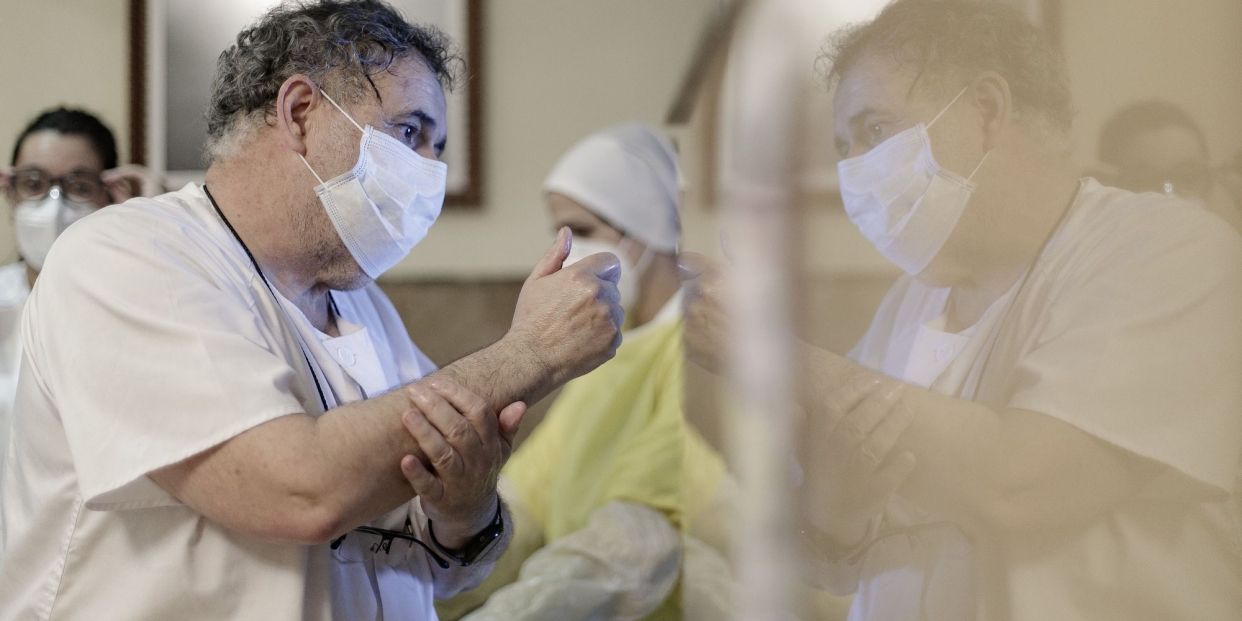
“The decrease in the volume and pressure of the cerebrospinal fluid causes what we call spontaneous intracranial hypotension. Unlike leaks caused by trauma or medical punctures, in this case it appears spontaneously due to a weakness of the dura mater, the protective layer of the nervous system,” explains Dr. Claudio Rodríguez Fernández, interventional neuroradiologist at the Quirónsalud Madrid University Hospital and head of the Department of Neuroradiology at the Fundación Jiménez Díaz University Hospital.
A headache that appears when you get up
The most characteristic symptom of this disease is a headache that worsens when standing and improves when lying downwhat is known as orthostatic headache. “In many patients, the pain appears when standing up and disappears when lying down. However, in some chronic cases this postural component can disappear and transform into a persistent headache,” says Dr. Rodríguez. In addition to the headache, patients may present other symptoms such as: difficulty concentrating, ringing in the ears, nausea, cervical color and balance disturbances.
In some cases the pain does not appear immediately upon getting up, but rather progressively worsens throughout the day, reaching its maximum intensity in the afternoon or evening due to the continuous leak of cerebrospinal fluid.
Three main causes of cerebrospinal fluid leak
Cerebrospinal fluid leaks can have different origins. Among the most frequent causes are: lperforation of the dura mater by a vertebral osteophytesimilar to “a puncture in a tire”; nerve root weaknesseswhich allow fluid to slowly leak and cerebrospinal fluid fistulas into a vein, an abnormal connection which causes drainage of fluid into the venous system. “This last cause has been described relatively recently and is often invisible in conventional MRI scans,” explains the specialist.
A difficult disease to diagnose
Patients with spontaneous intracranial hypotension It can take years to receive a correct diagnosissince this pathology can mimic other neurological diseases. “Up to 20% of patients with a real cerebrospinal fluid leak have normal MRI scans, which complicates the diagnosis,” says Dr. Rodríguez. In addition, this disease can be confused with: migraine, tension headache or Chiari type I malformation, which in some cases has even led to unnecessary cranial surgeries.
Stepped and minimally invasive treatments
Treatment of spontaneous intracranial hypotension is carried out in a stepwise manner. The first phase includes: rest, abundant hydration and the administration of caffeine with the aim of promoting the spontaneous closure of the leak. If the problem persists, an epidural blood patch can be performed, a technique in which the patient’s own blood is injected into the epidural space of the spine to seal the leak. When this treatment is not sufficient, fibrin glue can be applied directly to the leak point or fistulas can be treated by endovascular embolization or microsurgical surgery.
Photon counting technology: greater precision and less radiation
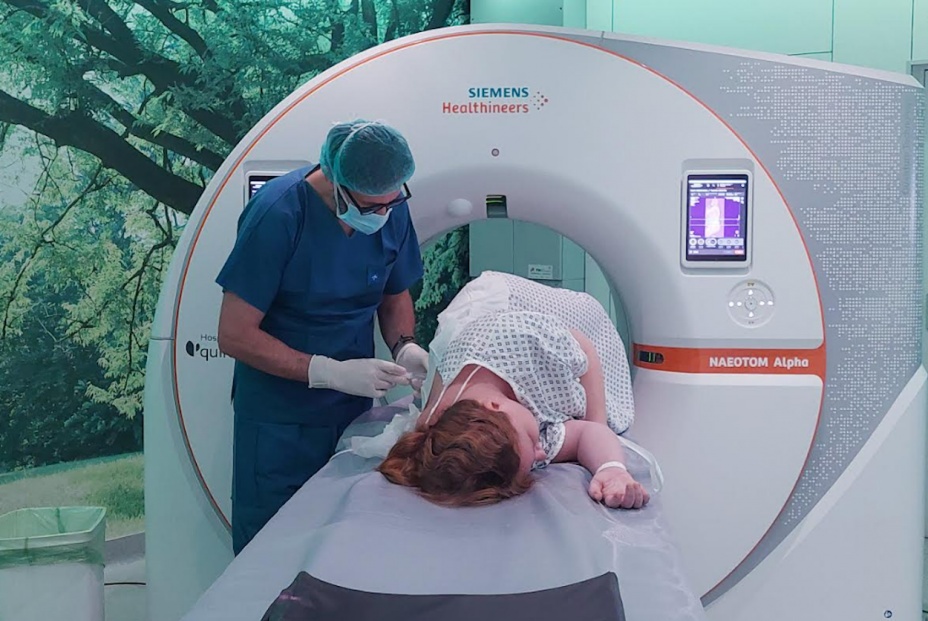
Epidural blood patching is performed under CT-guided imaging in a sterile environment. During the procedure, a specialist draws blood from the patient’s arm and the interventional neuroradiologist injects it into the epidural space using real-time imaging. “Photon counting computed tomography, available at the Quirónsalud Madrid University Hospital, significantly improves the success of these interventions thanks to its high resolution,” explains Dr. Rodríguez. This technology allows: to visualize millimeter structures; locate the exact point of the leak more precisely; placing the fibrin patch exactly at the affected vertebral level and reducing the radiation and contrast dose, something especially important in patients who require multiple follow-up studies.

Madrid will host the first Spanish symposium on spontaneous intracranial hypotension and CSF dynamics
With the aim of improving the diagnosis and treatment of these pathologies, on April 23 and 24, 2026 will be held in Madrid on International Symposium on Spontaneous Intracranial Hypotension and CSF Dynamicsthe first scientific meeting in Spain dedicated specifically to spontaneous intracranial hypotension and disorders of cerebrospinal fluid dynamics.
The event will bring together at the Quirónsalud Madrid University Hospital some of the main international experts in this disease from centers such as: Duke University, Johns Hopkins University, UCSF, Cedars-Sinai Medical Center and University Hospital Freiburg.
The symposium is organized by the Quirónsalud Madrid University Hospital and the Jiménez Díaz Foundation University Hospital, with the academic support of the Chair of Neurointerventionism of the Autonomous University of Madrid and the Jiménez Díaz Foundation Health Research Institute (IIS-FJD).
Institute of CSF Hemodynamic Disorders
The meeting will also serve to present the Institute of Cerebrospinal Fluid Hemodynamic Disorders, an initiative promoted by the Fundación Jiménez Díaz University Hospital and the Quirónsalud Madrid University Hospital aimed at improving research, diagnosis and treatment of diseases related to CSF dynamics.
[ad_2]
Source link