[ad_1]
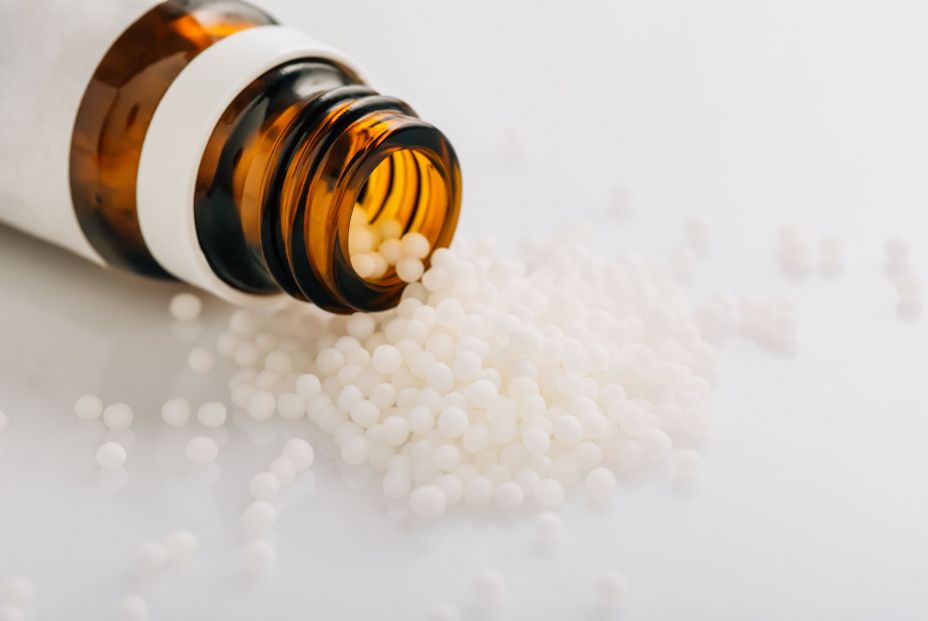
The Spanish Agency for Medicines and Health Products (AEMPS), attached to the Ministry of Health, has published a comprehensive technical report titled Homeopathy and homeopathic products: Evaluation of the evidence about their effectiveness and safetyin which it is categorically concluded that there is no scientific evidence that endorses the effectiveness of homeopathy as a therapeutic instrument. After a systematic review of the scientific literature and evaluations of state organizations at the international level, the report indicates that the observed effects They are comparable to placebo.
The report, which analyzed 64 systematic reviews published since 2009, highlights that the majority of studies suggesting benefits of homeopathy have low methodological quality, because are usually invalidated by small samplesshort follow-up periods or biases in randomization. Furthermore, the study qualifies, as the quality and rigor of clinical trials increases, the supposed effect of homeopathy decreases until it disappears.
From a scientific point of view, the principles of homeopathy clash with the laws of physics and current pharmacology. In common dilutions such as 12 CH, which is when one part of the original substance is mixed with one hundred parts of solvent twelve consecutive times, it is mathematically impossible for a single molecule of the original ingredient to remain in the preparation, which breaks any cause-effect relationship between the product and the therapeutic effect.
To illustrate this disproportion, the report points out that a dilution of only 6 CH (much less extreme than 12 CH) since it is equivalent to dissolve a sugar packet throughout the Mediterranean Sea. For this reason, the AEMPS qualifies theories such as the ‘memory of water’ – the belief that the liquid retains the properties of a substance, even if there are no longer any molecules of it – as postulates without empirical basis that challenge scientific and rational thinking.
Regulatory situation and market in Spain
In compliance with European and national regulations, the AEMPS has completed a regularization process that has resulted in numerous products being removed from the market. As of the date of publication of this report, there is no authorized homeopathic product with therapeutic indication in Spain. The 976 that remain registered have done so through a simplified procedure that, as it is based on extreme dilutions that guarantee the safety of the preparation, does not require evidence of therapeutic effect and prohibits them by law from including any therapeutic indication in their labeling.
International consensus and government measures
Spain aligns itself with a global trend of health institutions that have adopted critical positions:
- United Kingdom: The Science and Technology Committee recommended stopping public funding and warning labeling about the lack of effectiveness.
- Australia: The National Health and Medical Research Council concluded that homeopathy should not be used to treat chronic or serious illnesses.
- France: The Haute Autorité de Santé eliminated public reimbursement for these products in 2021 due to lack of proven effectiveness.
- Germany: It is expected that in 2026 the definitive elimination of homeopathy coverage by statutory health insurance will be approved.
- USA: The Food and Drug Administration (FDA) considers these products as “unapproved new drugs” and the Federal Trade Commission requires warning that there is no scientific evidence that they work.
Health and safety risks
Although there is a popular belief that these preparations They are harmless because they are “natural”, Serious adverse reactions, including poisoning from poor dosage and cases of infant deaths linked to teething products, have been reported in other countries.
However, the AEMPS warns that the main associated risk is abandonment or delay of medical treatments with proven effectiveness. Citizens who choose homeopathy to treat serious or chronic ailments may endanger their health by substituting evidence-based therapies for products that lack evidence.
The AEMPS report reaffirms the Ministry’s commitment to the protection of public health and to medicine based on scientific evidence. In line with other international agencies, it highlights the need to offer transparent information so that citizens can make safe decisions about their health. The conclusion is firm: in the absence of evidence on its effectiveness, homeopathy cannot be considered a valid therapeutic alternativeand its use should not lead to the delay or abandonment of medical treatments that have been proven to be effective.
[ad_2]
Source link