[ad_1]
A project led by the Sant Pau Research Institute (IR Sant Pau) in Barcelona has made it possible to establish new cognitive references based exclusively on people without amyloid pathology, who have demonstrated their ability to improve the early diagnosis of Alzheimer’s.
The results, published in two articles in ‘Alzheimer’s & Dementia: Diagnosis, Assessment & Disease Monitoring’, They allow us to detect cases of incipient cognitive deterioration that previously went unnoticed, Sant Pau reports in a statement this Wednesday.
The arrival of disease-modifying treatments requires identifying “with increasing precision” to patients who are in the very early stages, when the intervention is most effective and safe.
However, traditional neuropsychology faces a fundamental difficulty: determining what ‘normal performance’ really means in older people, taking into account that part of the decline associated with age can be confused with changes typical of the preclinical phase of Alzheimer’s.
The project responds to this need by redefining cognitive references with advanced tools and data from “rigorously selected” populations, which makes it possible to more accurately locate the threshold between healthy aging and real deterioration.
Biomarkers without Alzheimer’s
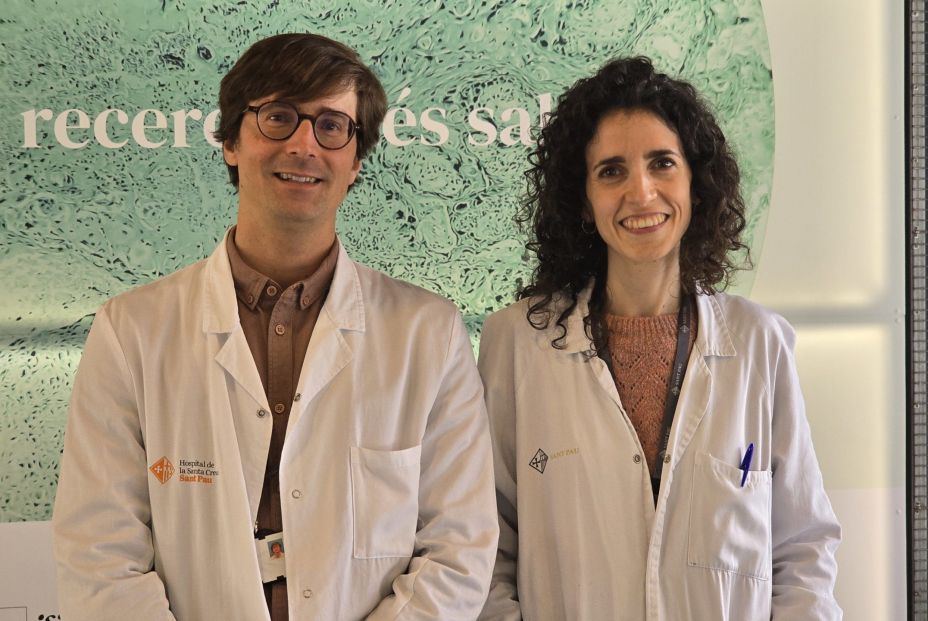
In the first part of the project, the team developed for the first time neuropsychological references based exclusively on people without Alzheimer’s biomarkers and using advanced statistical models, taking into account age, educational level and sex.
The approach allows us to define “more precisely” what can be considered truly normal cognitive performance in aging, since by excluding people who already present amyloid in the preclinical phase – even without symptoms – it prevents this slight decrease associated with the pathology from being confused with healthy aging.
At the same time, the researchers developed a clinical calculator that allows adjusted scores to be obtained “quickly and accurately”, facilitating the individualized interpretation of each case in those consulted from memory.
“Substantial” improvement
In the second part of the study, the analysis of a sample of more than 2,400 people without dementia, demonstrating that the application of these new references “substantially” improves the ability to identify very mild cognitive alterations.
Specifically, the new references make it possible to detect earlier 1 in 5 cases of incipient cognitive deterioration that previously went unnoticed.
The data confirm that this group does not represent cognitive variability typical of aging: these people have high rates of Alzheimer’s biomarkers and an efaster cognitive evolution in longitudinal analyses, indicating that they are in an early phase of the disease.
In contrast, the number of people that the new standards would classify as altered without there being biological evidence of disease is “very small”, around 3%, and in most cases the biomarkers are negative, which minimizes the risk of overdiagnosis.
Reference articles:
- Rubio-Guerra S, Sánchez-Saudídos MB, Sala I, Videla L, Bejanin A, Estanga A, Ecay-Torres M, de Luis CL, Rami L, Tort-Merino A, Castellví M, Pozueta A, García-Martínez M, Gómez-Andrés D, Lage C, López-García S, Sánchez-Juan P, Balasa M, Lladó A, Altuna M, Tainta M, Arranz J, Zhu N, Alcolea D, Lleó A, Fortea J, Rodríguez ER, Sánchez-Valle R, Martínez-Lage P, Illán-Gala I. Development of amyloid‐negative neuropsychological norms using GAMLSS. Alzheimers Dement (Amst) 2025;17. https://doi.org/10.1002/dad2.70224.
- Rubio-Guerra S, Sala I, Sánchez-Saudídos MB, Videla L, Bejanin A, Estanga A, Ecay-Torres M, de Luis CL, Rami L, Tort-Merino A, Castellví M, Pozueta A, García-Martínez M, Gómez-Andrés D, Lage C, López-García S, Sánchez-Juan P, Balasa M, Lladó A, Altuna M, Tainta M, Arranz J, Zhu N, Alcolea D, Lleó A, Fortea J, Rodríguez ER, Sánchez-Valle R, Martínez-Lage P, Illán-Gala I. Amyloid‐negative neuropsychological norms: Added value in the era of biomarkers and disease‐modifying therapies. Alzheimers Dement (Amst) 2025;17. https://doi.org/10.1002/dad2.70223.
[ad_2]
Source link