[ad_1]
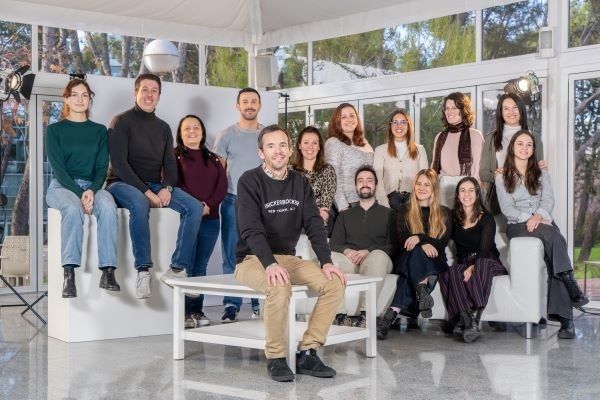
The head of the Brain Metastasis Group of the National Cancer Research Center (CNIO), Manuel Valiente, has assured that within five to ten years There will be more and better treatments for brain metastasis.
This is what Valiente indicates in a review he signs in the magazine Trends in Cancer as first author with researchers from Europe and the United States. “The findings of these years are reconfiguring the therapeutic strategies; There are clinical trials that specifically address brain metastasis. These advances are transforming the clinical landscape, offering hope for the prevention and treatment” of this disease,” says the researcher.
Valiente came to the CNIO in 2015 with the aim of improve the lives of people with brain metastases. Ten years later, his group’s research has led to two clinical trials now underway, a tool to know which drug works best for each patient and results that drive paradigm shifts. Several of these results are about to be presented.
One of his great projects, ALTERbrainfunded with almost two million euros by the European Research Council, has made it possible to discover that metastasis often interferes with the activity of neurons‘hacks’ it, and this can cause serious cognitive problems that worsen the quality of life.
Until now, no way was even sought to treat the effect of metastasis on the way of thinking and behaving, because it was attributed to the mere physical presence of the tumor in the brain, the so-called mass effect. Now Valiente is optimistic: “I am sure that within five, ten years we will find therapeutic strategies to reduce and/or prevent this brain dysfunction.”
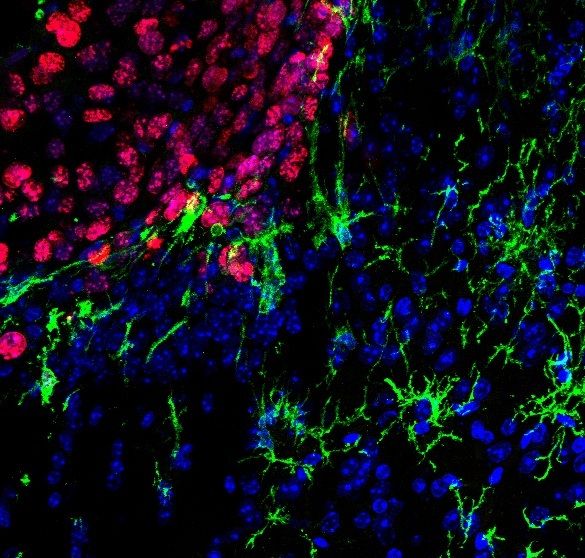
For the researcher, there is an unmet clinical need and it is urgent to find specific therapies for brain metastasis. Until 30 percent of patients cancer develop brain metastases, especially tumors of the breast, lung, skin and colon/rectum. But there is no specific treatment for these people beyond surgery and radiotherapy.
Furthermore, there is the paradox that, as improvements in the treatment of primary cancers prolong survival, there is more time for brain metastasis to appear. That is why the incidence of this disease is increasing.
“We are missing therapeutic opportunities”
The results of the CNIO group promote a conceptual change: brain metastasis is a disease with its own entity, not a mere extension of the primary tumoras has been understood until now. This change affects the search for treatments.
The data suggest that treating metastasis according to the tumor from which it comes, as is done today, “is insufficient,” says Valiente. “We see that There are potentially effective drugs to treat metastases that are not necessarily ‘on the table’ of the oncologist, because they are not those that correspond to the treatment of the primary tumor. “Our findings suggest that we are missing therapeutic opportunities,” he explains.
The CNIO group has obtained this result thanks to the first world bank of live samples of brain metastases‘RENACER’, and a platform to test drugs in a personalized way that these samples have allowed us to develop, METPlatform. The CNIO emphasizes that both resources, repository and platformare innovative research tools celebrated by the international neuro-oncology community.
“‘RENACER’ arose from an urgent need. When studying brain metastasis, the first thing is to provide more options to the patient, and for this we needed samples. Those sent to us by the two hospitals with which we collaborated were not enough. With the CNIO Biobank we launched the initiative of creating a national network without knowing if it would work, and it has been a great success. The response was immediate, super positive. In four years, 21 hospitals throughout Spain provided samples; Now we hope to expand the network to Europe,” said Valiente.
Regarding METPlatform, when the platform has regulatory approvals, it will allow the sample left over from the clinical use necessary for the diagnosis of the patient to be used to test multiple therapeutic optionsbefore applying them to that same patient.
“METPlatform takes precision medicine to the next level by build a therapeutic strategy beyond the primary tumor -which in general is not what kills the patient- and allows us to focus on metastasis, which is associated with the vast majority of deaths from cancer,” says Valiente.
Now, with the new results from METPlatform, researchers are understanding the molecular bases that could explain Why are there brain metastases that alter neuronal communication, and others that do not?. It is the first step to design strategies to avoid the phenomenon.
Valiente hopes to be able to accompany the samples, in the near future, with a cognitive evaluation of donor patients. “We are exploring innovative strategies based on online tests and others with artificial intelligence. The objective is always the same: research focused on improving the lives of people with brain metastasis,” concludes the researcher.
[ad_2]
Source link