[ad_1]
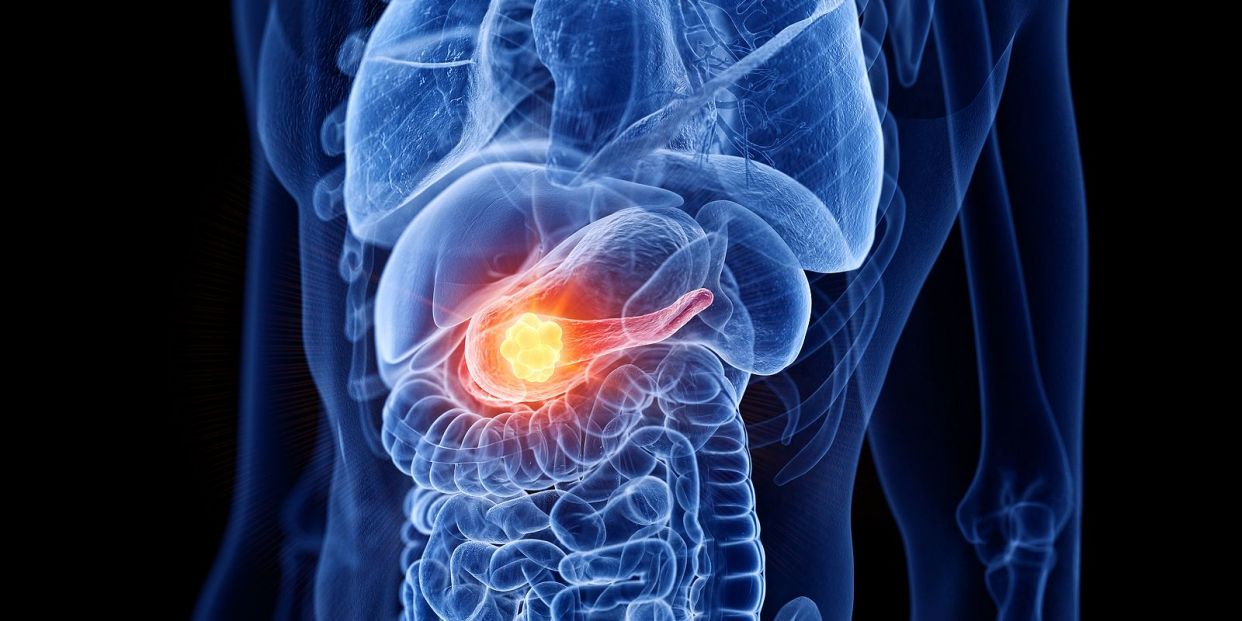
A mathematical tool is able to estimate the survival probability of patients with pancreatic cancer advanced from a simple blood test.
Developed by researcher Rocío del Campo Pedrosa at the University of La Rioja and the company Encore Lab, it offers information that can help oncologists guide and personalize treatments most suitable for each case.
Rocío del Campo Pedrosa has obtained the degree of doctor with her doctoral thesis titled Development of a prognostic and predictive tool for chemotherapy response in patients with locally advanced and metastatic pancreatic adenocarcinomathe first defended at the University of La Rioja that achieves the mention in Industrial Doctorate.
Carried out in the Department of Mechanical Engineering of the UR and the company Encore Lab, the thesis is part of the Doctorate program in Innovation in Product Engineering and Industrial Processes, it has been directed by Ana González Marcos and the engineer León Arnedo Piqueras (Encore Lab SL) and has been rated with outstanding cum laude.
Thanks to this research it has been possible to develop a prognostic and predictive toolcapable of estimating, using a standard blood test, the probability of one-year survival of patients diagnosed in the advanced or metastatic stage of pancreatic adenocarcinoma, one of the tumors with the worst prognosis.
In Spain, the majority of cases – around 10,000 new ones a yearaccording to the latest report from the Spanish Society of Medical Oncology (SEOM) – are detected in advanced stages, due to the lack of specific symptoms.
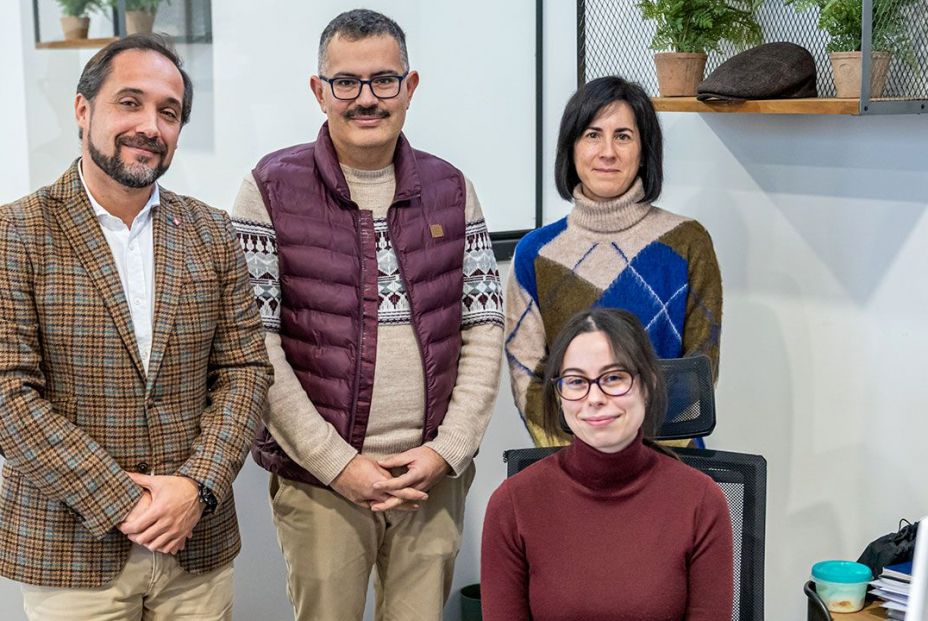
Photo: Dr. Rocío del Campo Pedrosa, seated, next to Eduardo Fonseca, vice-rector for Scientific Policy, and her thesis directors León Arnedo, CEO of EncoreLab, and Ana González Marcos, professor of Engineering Projects.
For this reason, therapeutic options are limited and survival is reduced: less than 30% of patients survive the first year and the rate falls to 8% after five years, according to data from the Spanish Network of Cancer Registries.
The results of this thesis facilitate a more accurate prognosis that can help decision-making in the management of the disease.
Mathematical model
The mathematical model developed uses only three common blood biomarkers (GGT, LDH and monocytes), which are obtained without complications with a blood test.
It is, therefore, a low-cost proposal, based on information that is routinely handled in any hospital environment, without the need for additional tests. For this research 241 patient samples were analyzed from the San Pedro de Logroño Hospital.
“If it is validated in other hospital centers, it could, through appropriate technological development, become a simple software tool: a program that, by entering these three values, automatically provides the probability – expressed as a percentage – that a patient with advanced pancreatic cancer will survive the following year,” says Rocío del Campo.
This percentage – with a 74.1% reliability (AUC metric) – does not predict all the details of the patient’s evolution, but offers the oncologist additional information to make more informed and personalized decisions.
“For example,” explains the researcher, “in some cases Chemotherapy may not prolong life, but it may greatly affect its quality due to side effects.; With this information, the doctor can consider whether an aggressive treatment will be beneficial or if it is better to opt for a less toxic one or even abstain.”
During her thesis, the researcher has also identified a new prognostic biomarker, based on a ratio between hemoglobin and monocytesnot evaluated until now in advanced pancreatic cancer.
This indicator, accessible and low cost“is more consistent than other classic biomarkers evaluated in the study and is configured as a particularly promising line of research to delve into in future work,” Del Campo specifies.
The research also includes an analysis of chemotherapy combinations and sequences used in advanced pancreatic cancer, highlighting those that could be associated with better results, which provides useful information for future research and clinical comparisons.
This project has been developed on behalf of the company Encore Lab, which provided technological resources and experience, in collaboration with the CIBIR and the San Pedro de Logroño Hospital, whose specialists provided the clinical data and participated in the joint review.
It has been financed by the General Directorate of Reindustrialization, Innovation and Internationalization of the Government of La Rioja.
The thesis is part of the Doctoral Program in Innovation in Product Engineering and Industrial Processes.
Although it is a health problem, the solution is built entirely from a modern industrial engineering perspective, using data science, mathematical modeling and statistical analysis advanced to transform real clinical data into practical tools that improve medical decision making.
This is a preliminary study whose results provide a solid basis for the development of more precise models and favor the evolution towards a clinical practice more adapted to the individual characteristics of each patient.
[ad_2]
Source link