[ad_1]
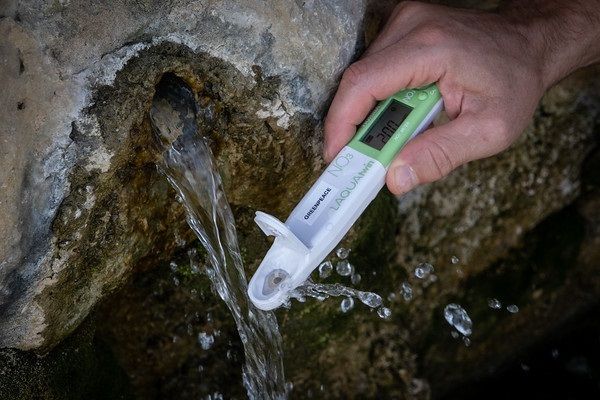
Greenpeace has warned that in Spain “the established risk level of nitrate in water would be widely exceeded” by an international scientific team, which recommends reducing the current limit almost nine times, to 6 mg/l.
The NGO highlights that an international scientific team, mandated by the Danish Ministry of the Environment, has completed a “comprehensive review” of scientific evidence on the impact of nitrates in water and concludes that “they pose a risk to health, even in concentrations much lower than the current legal limit.”
In response to these new indications, Greenpeace warns that in Spain “that level of risk would be greatly exceededsince decades ago the legal limit was established at 50 mg/l, with the main objective of protecting infants against acute methemoglobinemia.
Since then, scientific knowledge about The effects of nitrates on health have advanced considerably and todayas confirmed in this new study, “should be reduced almost nine times.”
The latest data from the National Drinking Water Information System (SINAC) of the Ministry of Health reveal that in 332 municipalities tap water could not be drunk sometime in 2024 due to the concentration of nitrates “exceeded the current legal limit (50 mg/l), a pollution caused essentially by the massive use of synthetic fertilizers used in intensive agriculture and the enormous excrement of animals exploited by cruel intensive livestock farming and its macro-farms.
However, in light of the new limit proposed by science (6 mg/l), Greenpeace observes that in 51.17% of the Spanish municipalities where nitrates are analyzed, that is, in 3,192 municipalitiesthis value was equaled or exceeded at some point in 2024, “exposing a significant part of the population to a concentration of nitrates harmful to health.”
For the organization, another important aspect is that in 23% of Spanish municipalities “People still don’t know what their water is like in terms of nitrate levels.”
By autonomous communities, he states that it stands out Castilla y León with almost 1,000 municipalities (987) in which the level of 6 mg/l was equaled or exceeded (in 198 the level of 50 mg/l was exceeded, 38% more than in 2023). They follow him Catalonia with 413 municipalities, Andalusia with 370, Valencian Community with 330, Castilla-La Mancha with 309, Aragón 305 and Galicia 111. “It coincides with the CCAA where agriculture is more intensified and livestock farming more industrialized,” he points out.
Nitrate pollution is already considered by the Ministry for the Ecological Transition and the Demographic Challenge as “the main problem affecting Spanish water masses”according to Greeanpeace, which warns that “it is really serious, so much so that the inaction of the competent administrations led the Court of Justice of the EU to issue, in 2024, a condemnatory sentence against the Spanish State for non-compliance with the Nitrates Directive.”
“This pollution has environmental repercussions -some well-known examples are the Mar Menor or the As Conchas reservoir- but also about health. At the European level, it is considered that 81% of the contribution of agricultural nitrogen to aquatic systems comes directly and indirectly from livestock farming,” concludes the NGO.
[ad_2]
Source link