[ad_1]
A team of researchers from the Higher Council for Scientific Research (CSIC), the Autonomous University of Madrid (UAM) and the Network Biomedical Research Center for Neurodegenerative Diseases (CIBERNED) has carried out a study that has shown that the cold sore virus causes alterations such as those of Alzheimer’s in neuron cultures.
This work, carried out by members of the aforementioned CIBER and the Severo Ochoa Molecular Biology Center (CBM), which is a mixed area of the CSIC and the UAM, has specifically shown that infection by the herpes simplex virus type 1 causes, in a 3D model of human neurons, the cellular alterations characteristic of Alzheimer’s. However, it reproduces an acute infection under laboratory conditions, which does not reflect the evolution of the virus in people over time.
“Our results show that a very common virus can activate, in human neurons, molecular processes that are considered characteristic of Alzheimer’s,” he highlighted. Maria Jesus Bullidowho is a CBM researcher, and who added that this “reinforces the idea that, in addition to genetic factors, certain environmental factors could influence the disease.”

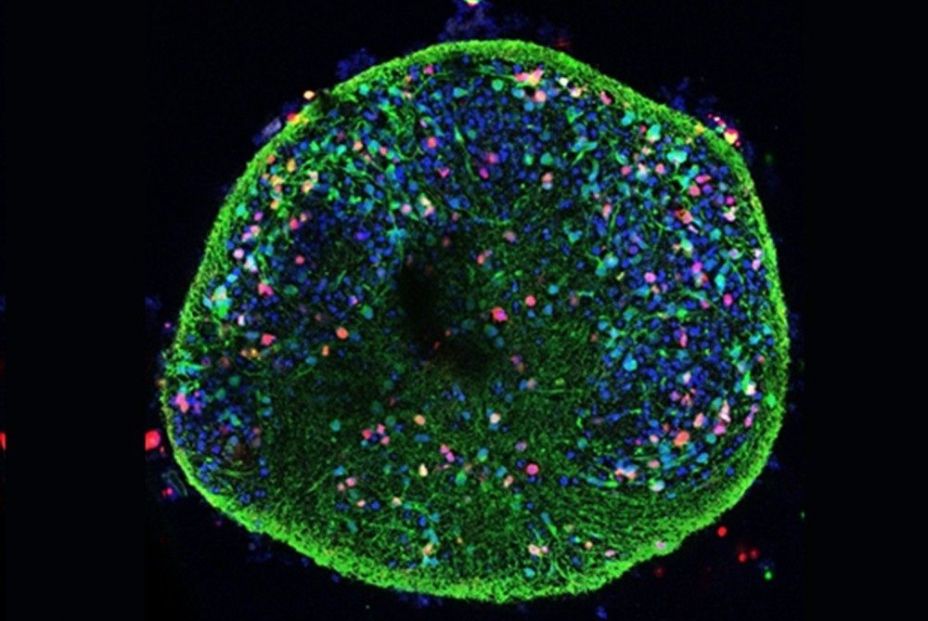
To reach this conclusion, the experts, whose study has been published in the journal International Journal of Molecular Scienceshave used a line of human cells capable of rapidly and uniformly transforming into functional neurons in the laboratory. These have been grown on both traditional flat surfaces (2D) and three-dimensional structures (3D).
3D models
“These three-dimensional models allow cells to grow forming aggregates that better imitate the organization of human nervous tissue, reproducing, in a more realistic way, the interactions and environment that exist in the brain,” he detailed. Jesus Aldudowho is also a member of the CBM. Thus, these models have been organized in the form of small spheres (spheroids) because, in the 3D environment, neurons can grow in all directions, form more complex networks and are structured in layers, something closer to what happens in brain tissue, which traditional flat cultures do not allow.
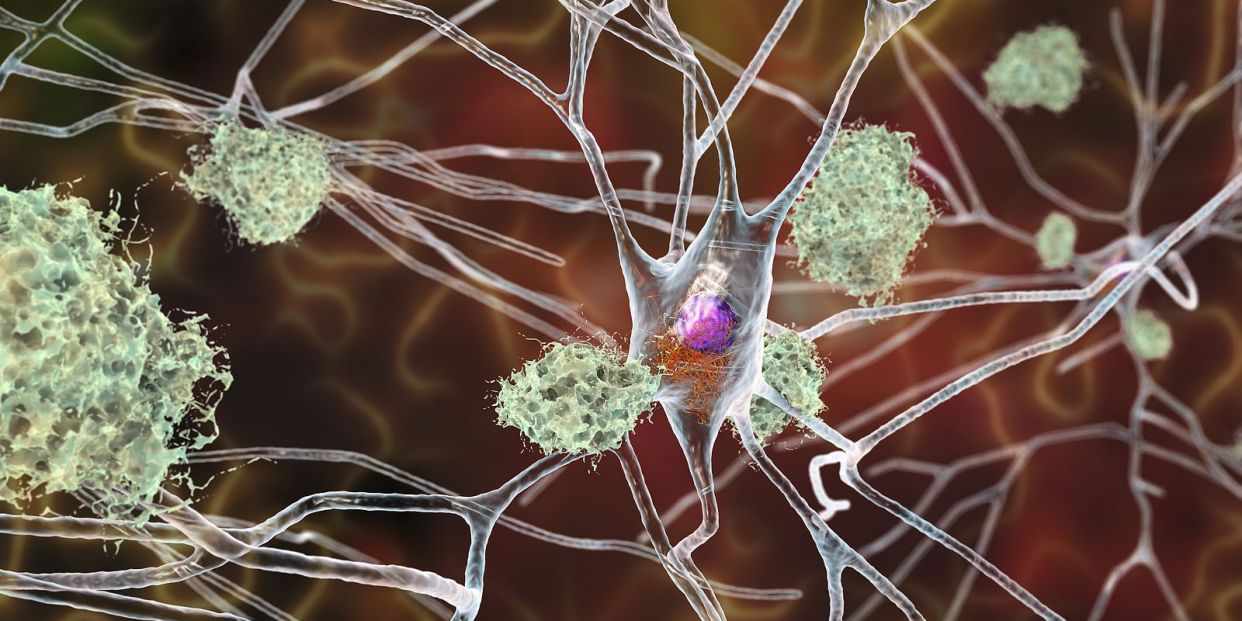
Elaborating on the results obtained, the CSIC has indicated that these show that infection with the cold sore virus causes, within neurons, an accumulation of beta-amyloid that, in excess, is toxic. Furthermore, it has been observed a significant increase in anomalous modifications in the tau protein, which is altered, loses its normal function and contributes to the deterioration of neurons.
In this regard, experts have recalled that, among the best-known biological signs of Alzheimer’s, the abnormal accumulation of the aforementioned beta-amyloid protein and the abnormal chemical alterations of another protein, the aforementioned tau, essential for the functioning of neurons stand out. Along with this, they have insisted that, in recent years, studies in the human population and in brain tissue have suggested that certain persistent infections could influence the development of the disease, pointing to the cold sore virus.
This work indicates that the cold sore virus interferes with a fundamental cellular cleaning system responsible for degrading and recycling damaged or unnecessary proteins, since, when this mechanism fails, altered proteins accumulate and neurodegeneration processes can be favored. This is, in the opinion of the researchers, an extremely relevant discovery, since these effects were not only detected in simple cell cultures, but also in three dimensional modelswhere the virus was able to penetrate the entire neuronal structure and cause the same molecular alterations related to Alzheimer’s.
Finally, experts have highlighted that this model provides a experimental tool very valuable to analyze, under controlled conditions, how a frequent viral infection, such as cold sores, can affect the cellular mechanisms involved in Alzheimer’s and open new avenues for the design of prevention and treatment strategies.
[ad_2]
Source link