[ad_1]
Identifying the risk of Alzheimer’s before the first symptoms appear could improve the lives of millions of people in the coming years. With that objective, the Barcelonaßeta Brain Research Center (BBRC), research center of the Pasqual Maragall Foundation, promotes ALPHA10a pioneering project that seeks to anticipate the disease through the development of a predictive algorithm capable of detecting people at highest riskeven before the first signs of cognitive decline appear.
The project, led by Dr. Gonzalo Sánchez, researcher and neuropsychologist at the BBRCseeks to transform the approach to Alzheimer’s disease by facilitating its early detection, improving the selection of candidates for clinical trials and opening the door to personalized treatments. “The objective of this project is to better understand how the disease progresses before symptoms appear and, thus, prepare an action protocol for high-risk cases that, in the long run, can be adopted by the health system.”explains the project leader.
The arrival of the first treatments capable of slowing the progression of Alzheimer’s has opened a new stage in the approach to the disease. However, their effectiveness largely depends on applying them on time. In most cases, the diagnosis occurs when the brain damage is already irreversible. ALFA10 wants to change this paradigm, moving the focus to the preclinical phase of the disease and creating tools that allow intervention earlier and more effectively.
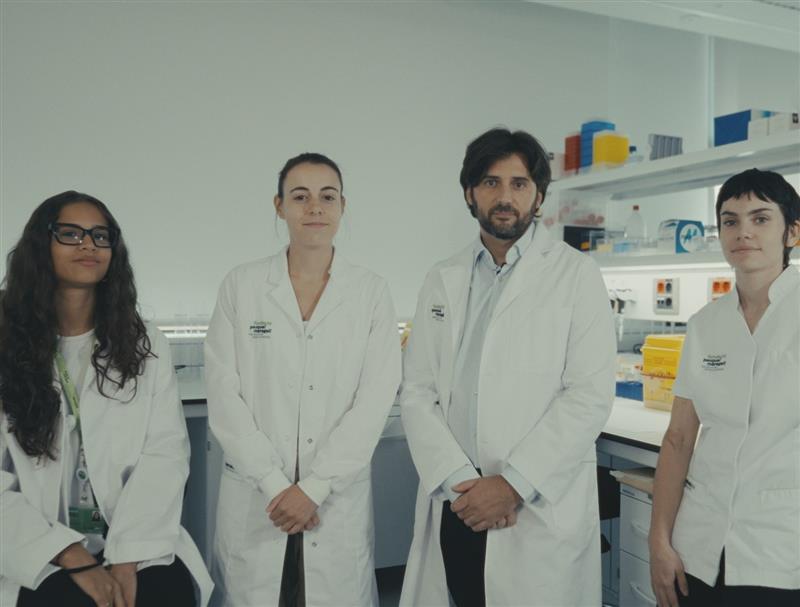
The ALFA10 study, a new stage in research
ALFA10 goes one step beyond ALFA Studypromoted in 2013 by the “la Caixa” Foundation and developed by the BBRC, which allowed the recruitment of more than 2,700 healthy volunteers between 45 and 75 years old in order to study the early biological and cognitive changes related to Alzheimer’s. Throughout these years, many of them have participated in different evaluations and complementary studies, contributing to generating a valuable database and biological samples.
Now, ALFA10 continues that research with a renewed and more ambitious approach. Instead of recruiting new people, the project has recontacted original participants to continue monitoring and delve deeper into the evolution of your brain health. Many of these people have been invited back to the center to perform blood tests and cognitive tests to more accurately detect changes in biomarkers and thus be able to more accurately observe the biological processes that precede the disease.
Furthermore, the project incorporates a remote monitoring through questionnaires and digital cognitive evaluation tools, which will facilitate continuous monitoring of brain status without the need for frequent in-person visits. This approach, based on following the same cohort for almost fifteen years, will provide key information on how the disease progresses and will allow identify people at highest risk before symptoms appear. The first in-person visits are planned for January 2026, after which continued digital monitoring will begin.
Three steps to anticipate Alzheimer’s
The development of the ALFA10 predictive algorithm is structured in three main phases. The first consists of the data collection and analysiswhich will include new blood biomarkers along with clinical and cognitive variables of the participants, analyzed in the BBRC laboratories.
In a second phase, all this information will be integrated with historical data collected for almost fifteen years to create a predictive model capable of accurately estimating the individual risk of suffering from Alzheimer’s.
Finally, the project is aimed at prevention and treatment, with the aim of identify risk profiles and facilitate the development of personalized therapiesbringing prevention closer to clinical practice and reducing the impact of the disease before it causes irreversible brain damage.
A scientific advance with social impact
ALFA10 represents a qualitative leap in Alzheimer’s research. For the first time, a project of this scope combines biomarkers detectable in blood with remote digital cognitive monitoring tools, which will allow more precise, sensitive and continuous monitoring of brain status.
In addition, it has a clear vocation for transfer to the health system. Beyond generating scientific knowledge, the project seeks to convert the findings into useful protocols and tools applicable first in specialized centers and, over time, in primary care.
Long-term follow-up of the same participants for more than a decade will allow us to observe the biological and cognitive changes that precede symptoms, providing essential information about how the disease progresses and facilitating early and personalized intervention. “Once developed, the algorithm will be validated with independent data samples and in new cohorts of participants, which will allow its effectiveness to be evaluated and facilitate its clinical application.“, adds the Dr. Sanchez.
A campaign to change the future of Alzheimer’s
To make this progress possible, the Pasqual Maragall Foundation has launched a campaign that aims to raise 250,000 euros. This funding will accelerate the development of the algorithm and bring early detection of Alzheimer’s closer to clinical practice, with the potential to improve the lives of millions of people in the coming years.
Alzheimer’s in numbers
It is currently estimated that Alzheimer’s and neurodegenerative diseases affect 900,000 peoplea figure that translates into one in ten over 65 years old and a third of those over 85. These pathologies are one of the main causes of mortality, disability and dependency. If an effective cure is not found and with life expectancy increasing, in the year 2050 the number of cases could triple in the world, exceeding one and a half million people in Spain alone, a fact that could collapse health and care systems.
About the Pasqual Maragall Foundation
The Pasqual Maragall Foundation is a private non-profit entity that was born in April 2008, in response to the commitment made by Pasqual Maragall (former mayor of Barcelona and former president of the Generalitat of Catalonia) when he publicly announced that he had been diagnosed with Alzheimer’s. The Foundation is directed by Arcadi Navarro and chaired by Cristina Maragall, daughter of Pasqual Maragall. The latter holds the position of honorary president.
More than 200 professionals They currently work at the Foundation with a double mission: to promote research to prevent Alzheimer’s, and to offer solutions that improve the quality of life of affected people, their families, and caregivers. In the field of scientific research, the Foundation has the Barcelonaβeta Brain Research Center (BBRC)a research center dedicated to disease prevention and the study of cognitive functions affected in healthy and pathological aging.
All this is possible thanks to the support of fifteen entities and a social base of more than 100,000 members, who contribute financially to the continuity of the project. Your support is essential to continue working for a future without Alzheimer’s, since scientific research is the only way to defeat the disease.
[ad_2]
Source link