[ad_1]
A team of researchers from the Polytechnic University of Madrid (UPM) and the Complutense University of Madrid (UCM) has developed a innovative material from grape waste capable of eliminating meropenem in hospital water, a fourth generation antibiotic that, due to its high stability, does not degrade in conventional systems water treatment.
Thus, the new material obtained, which functions as a filter, managed to eliminate 100% of the antibioticor, even in conditions equivalent to real hospital waters and with high concentrations of the contaminant.
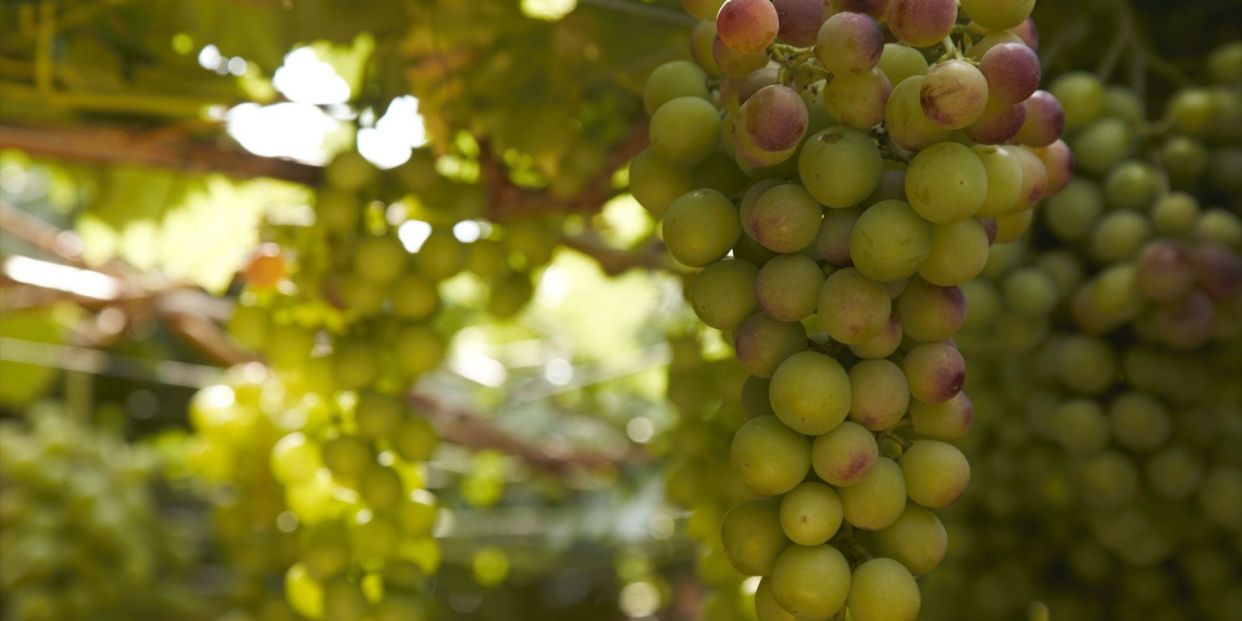
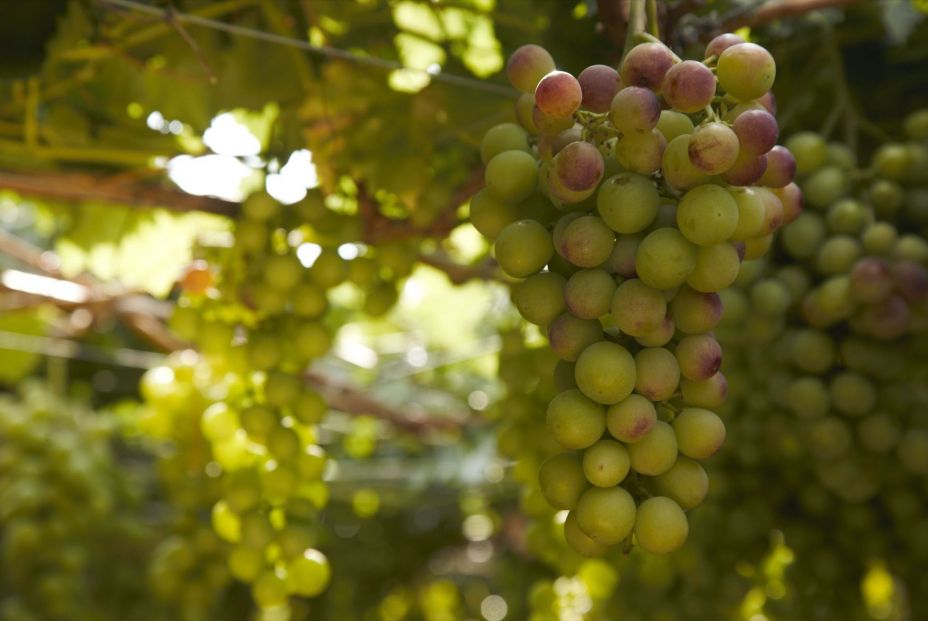
The stem is the woody part of grape clusters that is normally removed to make wine. It is an agricultural waste abundant for which two research groups have now found use: INPROQUIMA -from the UCM-, and Sustainable Production and Protection Systems -from the CEIGRAM-ETSIAAB of the UPM-. Both groups have collaborated in obtaining a new decontaminating material from grape stems obtained through pyrolysis and subsequent activation with sodium hydroxide.
The result (chemically activated biochar of wine origin) is a carbonaceous material with a porous honeycomb structure and functional groups capable of interacting with and retaining contaminating elements, such as antibiotics. Tests showed that this chemical modification multiplies the effectiveness of the material in the adsorption of the contaminant. While the untreated biochar adsorbed between 48 and 60 percent of the contaminant, the activated biochar managed to eliminate the contaminant in its entirety.
The experiments confirmed that the adsorption is rapid, stable and spontaneous, adjusting to kinetic and thermodynamic models that indicate chemical and physical interactions. Furthermore, the synthesized biochar showed a high reusability capacity, maintaining more than 90 percent of its performance after five cycles of use, and contributed to reducing the salinity of the water, improving its overall quality.
Social and environmental implications
The results obtained with this work offer a double advantage. On the one hand, reduce the volume of agricultural waste that must be managed, converting them into value-added resources that are reusable in environmental uses such as water treatment and, on the other, protect public health by preventing antibiotics from reaching rivers and aquifers. “The application of the developed filter in hospitals and treatment plants could be an effective and sustainable tool in the face of the antimicrobial resistance crisis, one of the greatest health challenges of the 21st century,” comment the researchers.
The work has been carried out by researchers from the Faculty of Chemical Sciences (UCM) and the Higher Technical School of Agronomic, Food and Biosystems Engineering (UPM), with the support of projects financed by the Ministry of Science and Innovation, the Community of Madrid, the European Union (NextGenerationEU) and the Marie Sklodowska-Curie.
[ad_2]
Source link