[ad_1]
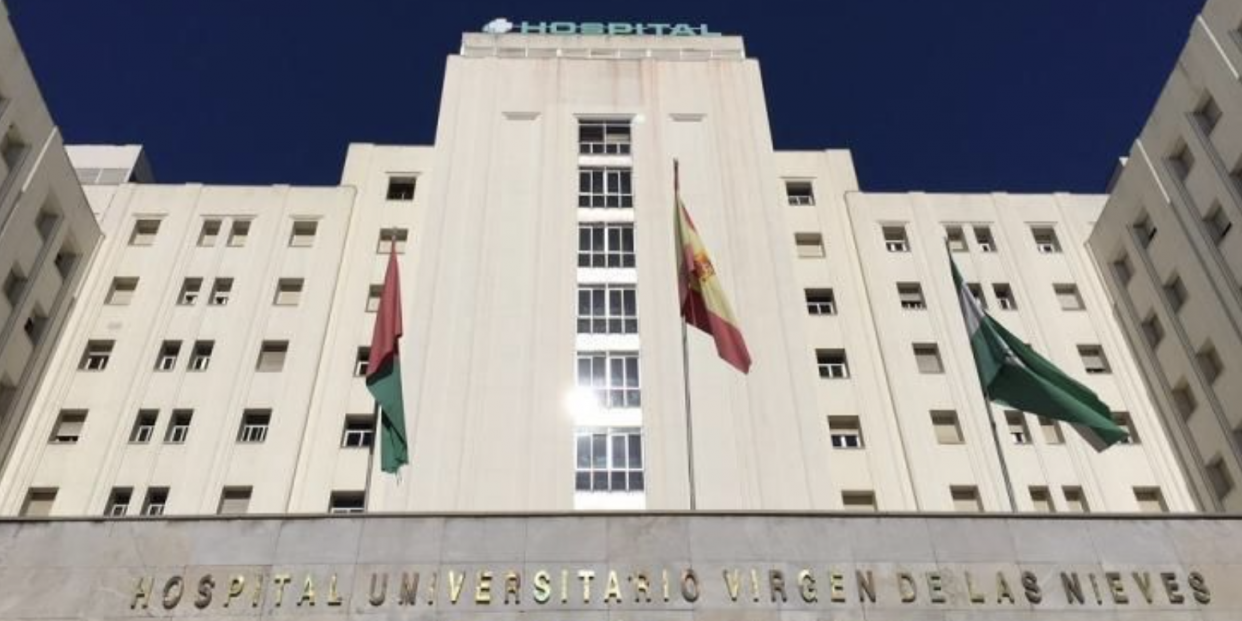
A team of researchers from the University of Granada and the Virgen de las Nieves University Hospital has shown that the nebulization automated with hydrogen peroxide (H₂O₂) It is highly effective in reducing the presence and infectious capacity of SARS-CoV-2 in hospital environments.
The study, published in the journal ‘Microbiology Spectrum’, is led by Concepción Morales-García, researcher and head of the Pulmonology service at Virgen de las Nieves, together with a multidisciplinary team of specialists in microbiology, pulmonology and mathematical analysis.
Nebulization with hydrogen peroxide is achieved thanks to the system Ductfit patented by the company CleanAir Spaces. This technology is based on the generation of H2O2 ions and is capable of eliminating 99.99% of viruses and has been proven to be 100% safe for people. Its effectiveness, in addition to this research, was certified by a study by the Higher Council for Scientific Research (CSIC) and the Autonomous University of Madrid that concluded that DuctFIT technology eliminates the COVID-19 virus by 99.7% in just 15 minutes of exposure.
The recent research by the University of Granada and the Virgen de las Nieves Hospital was carried out in covid-19 patient rooms, where air and surface samples were taken before and after applying an automated disinfection system. The results show a significant reduction in contamination: in the air, positive samples went from 55.6% to 22.2% and on surfaces from 44.4% to 13.9%.
In addition to the decrease in the presence of genetic material from the virus, scientists observed a increase in Ct values, which indicates a lower viral load after treatment. But one of the most relevant findings goes beyond simple detection: the residual virus identified after disinfection was not capable of infecting cells.
The team combined molecular biology techniques, cell cultures and mathematical analysis to obtain a more complete view of the process. This approach allowed us to demonstrate that The presence of viral RNA does not necessarily imply a risk of contagion, since it may correspond to inactive viral fragments.
The study also introduces a mathematical model that describes how the misting system acts over time. The researchers identified a non-linear behavior, with an initial lag phase followed by a more rapid elimination of the virus. This dynamic depends on environmental factors such as ventilation or humidity, which is key to optimizing disinfection protocols in each environment.
In this sense, Concepción Morales-García highlights the importance of adapt strategies to the real conditions of clinical spaces, while Dr. Solano-Parada emphasizes that the combined use of different techniques allows the real risk of infection to be assessed more accurately.
Another innovative aspect of the work is the incorporation of artificial intelligence tools, specifically generative models, which have made it possible to improve the precision of the analyzes despite the limited availability of experimental data.
The results reinforce the potential of hydrogen peroxide nebulization as a tool for controlling hospital infections. In this way, this type of solutions can contribute decisively to reducing the transmission of pathogens in healthcare environments and improving the safety of patients and professionals.
The researchers conclude that this system is not only effective against SARS-CoV-2, but could also be applied in the prevention of future airborne viral threats, offering an adaptable and data-driven approach to disinfection in hospitals.
[ad_2]
Source link