[ad_1]
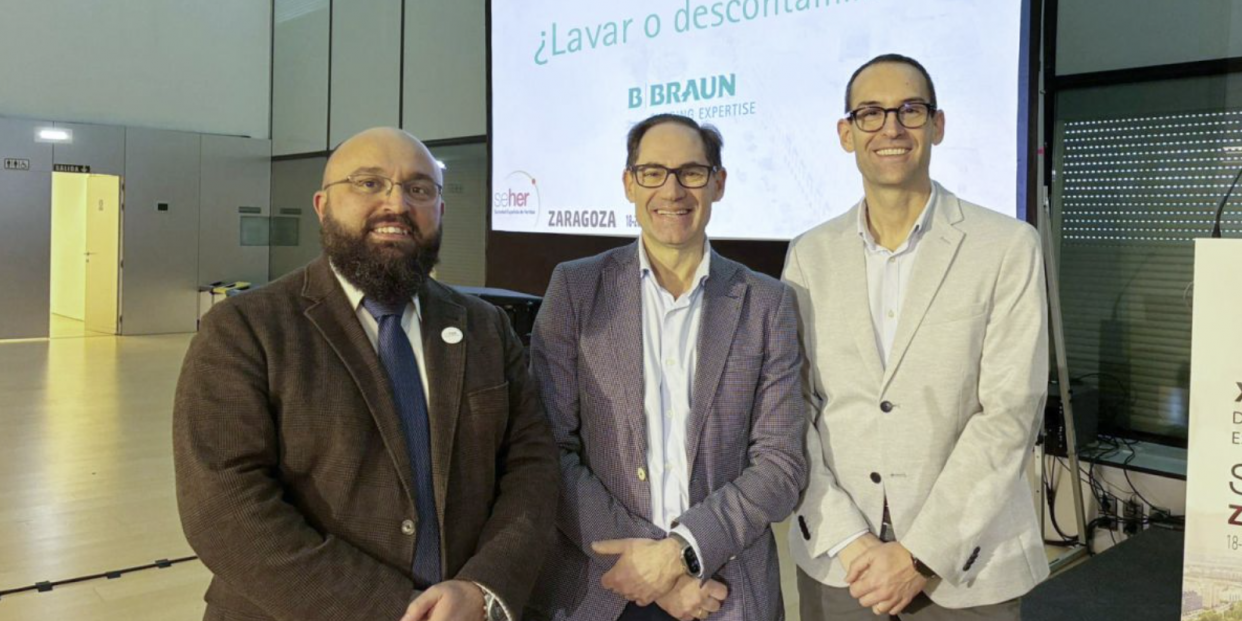
The medical technology company B. Braun has celebrated, within the framework of the Congress of the Spanish Wound Society (SEHER)the symposium “Wash or decontaminate? Breaking myths in wound care”bringing together expert wound care healthcare professionals to address therapeutic cleansing and healing, underscoring the importance of using specialized solutions to achieve more effective and faster healing.
During the symposium, one of the most common myths in wound care was highlighted is the belief that Washing and decontaminating a wound are equivalent processes. However, washing is a superficial technique that only removes floating bacteria, but does not act against bacteria resistant nor does it eliminate bacterial biofilm, a factor that can delay healing.
In this case, it is essential to use specialized products that clean the wound and that can break the biofilm and decontaminate, promoting a suitable environment for tissue regeneration. According to the doctor José Luis Lázaro Martínez, head of the Diabetic Foot Unit of the Complutense University of Madrid“Demystifying this difference is key because washing and decontaminating are not equivalent processes. Simple washing can eliminate debris and part of the surface bacterial load, but it does not act effectively on critical elements in chronic wounds.”
For his part, Dr. Iván Julian RochinaPhD professor at the University of Valencia. Faculty of Nursing and Podiatry. Plaza linked to the University and Polytechnic Hospital of Valencia, Ulcers and Wounds Nursing Unit, highlights that “underestimating the cleaning of lesions means prolonging the healing time of a wound. Cleaning correctly helps to destructure the biofilm, facilitating the action of the immune system, reducing inflammation and the grouping of cells to advance the healing process.”
The experts also highlighted how sterile solutions based on polyhexanide and betaine They effectively remove biofilms and improve the wound environment. These have an antimicrobial action that helps prevent infections, promoting faster tissue regeneration and normalizing the pH of the wound. This allows for faster healing and reduces the risk of infections and complications.
“These solutions allow us to intervene directly on altered environments, creating an optimal microenvironment for healing. This translates into three key benefits: the acceleration of the closure process, the minimization of possible complications and, ultimately, the improvement of the quality of life of the patient with wounds,” he stressed. David Perez BarrenoAdvanced Practice nurse in Complex Chronic Wounds in the Málaga-Valle del Guadalhorce Health District and associate professor at the University of Málaga.
In a comparative study with traditional alternatives, these types of solutions showed a reduction in infections from 40% to 3%, highlighting their effectiveness in cleaning wounds and creating a suitable environment for healing. Additionally, in the treatment of chronic wounds, they can reduce healing time by up to four weeks, improving both clinical outcomes and the efficiency of medical treatment.
“At B. Braun, we understand that wound care is a fundamental part of people’s health and well-being. We are committed to accompanying health professionals in every step of the process, offering them innovative alternatives that optimize healing and improve the quality of life of patients,” said Nuria Ibáñez, director of Avitum at B. Braun.
[ad_2]
Source link