[ad_1]
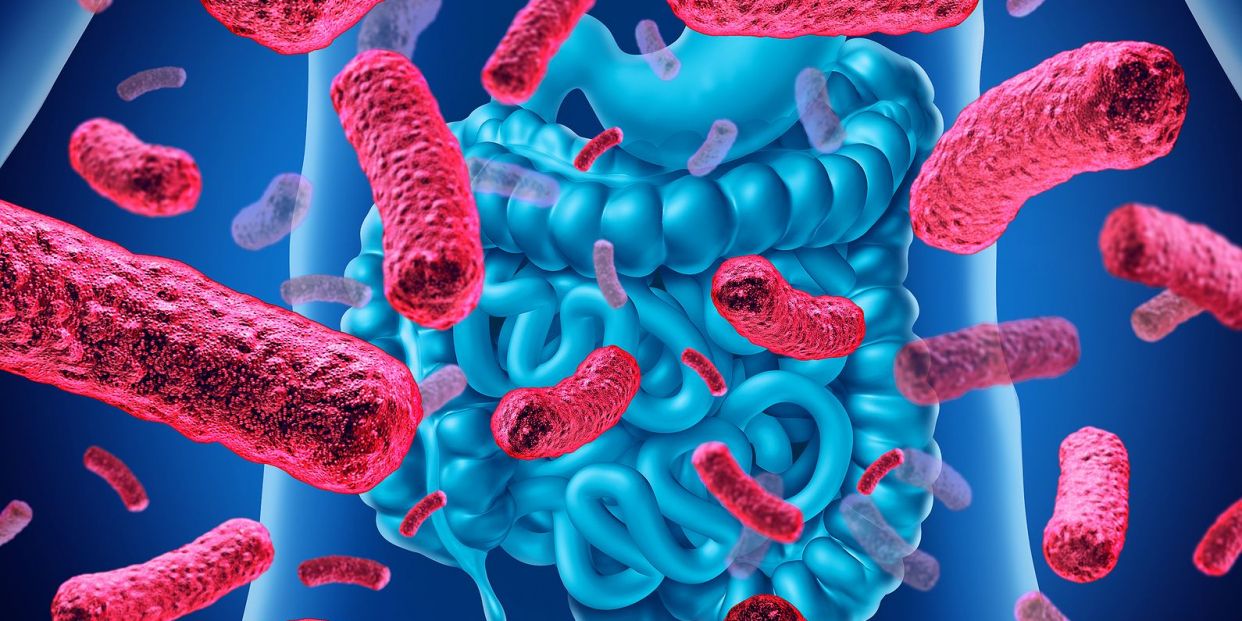
Our intestine houses thousands of millions of bacteriamany of which still remain unknown. A recent global study led by researchers from the Cambridge University has identified a group of ‘hidden’ bacteria, called CAG-170, which appears consistently in the microbiomes of healthy people and could play a central role in keeping our bodies functioning properly.
Analyzing more than 11,000 samples from people in 39 countries, scientists discovered that CAG-170 levels were lower in those with diseases such as obesity, inflammatory bowel disease or chronic fatigue syndrome. This suggests that these bacteria could become an indicator of intestinal health and open the door to new personalized probiotics.
The hidden microbiome that could make a difference
In a large global study led by researchers at the University of Cambridge (UK), a single group of bacteria, called CAG-170, has repeatedly appeared in large numbers in the gut microbiomes of healthy people. This finding, published in ‘Cell Host & Microbe‘, suggests that these “hidden” bacteria in our intestine seem to be key to good health.
CAG-170 is a group of gut bacteria known only by their genetic fingerprints; Scientists have never been able to grow most of them in the laboratory. Using various computational approaches, the research team searched for the genetic fingerprint of CAG-170 in gut microbiome samples from more than 11,000 people in 39 countries.
Vitamins, enzymes and intestinal balance
Thus, they discovered that the level of CAG-170 present was consistently higher in healthy people than in those with diseases such as inflammatory bowel disease, obesity and chronic fatigue syndrome.
Subsequently, additional analysis of CAG-170 revealed that it has the capacity to produce high levels of vitamin B12 and enzymes which break down a wide range of carbohydrates, sugars and fibers in our gut. Researchers believe that vitamin B12 is likely to benefit other species of gut bacteria, rather than the humans in whose intestines it is produced.
The findings indicate that CAG-170 could, in the future, be used as indicator of the health of our intestinal microbiome. In addition, they open the door to the development of new probiotics specifically designed to promote and maintain healthy levels of CAG-170 in the intestine.
Alexander Almeidaa researcher at the Department of Veterinary Medicine at the University of Cambridge who led the work, underlines: “Our work has revealed that CAG-170 bacteria, part of the ‘hidden microbiome’, appear to be key players in human health, probably helping us digest the main components of our food and keeping the entire microbiome functioning smoothly.
We analyzed the gut microbiota of thousands of people in 39 countries and 13 different diseases, such as Crohn’s disease and obesity. “We consistently observed that people with these diseases had lower levels of CAG-170 bacteria in the gut.”
The study builds on Almeida’s previous work to create a complete reference catalog of all the genomes of the human gut microbiome, called ‘Unified Catalog of the Human Gastrointestinal Genome’. The research used an approach called ‘metagenomics’, which basically involves analyzing the genomes of all gut microbes at once and then separating them into genomes of individual species.
Probiotics of the future: designed for CAG-170
This revealed more than 4,600 bacterial species, including more than 3,000 that had not previously been observed in the gut, indicating the extent of the ‘hidden microbiome’ that remains to be explored. The catalog provided ‘reference genomes’ for each species, including CAG-170: these are like fingerprints that researchers can now look for in other samples of the gut microbiome.
“Our previous work revealed that about two-thirds of the species in our gut microbiome were unknown. No one knew what they were doing there, and now we have discovered that some of them are a fundamental component and little appreciation of human health,” says Almeida.
The team analyzed more than 11,000 samples of human intestinal bacteria from people in 39 countries, mainly in Europe, North America and Asia. These came from healthy people and people with 13 different diseases, such as Crohn’s disease, colorectal cancer, Parkinson’s and multiple sclerosis.
By comparing each sample with the catalog of the Unified Human Gastrointestinal Genomeresearchers observed that CAG-170 bacteria are the part of the ‘hidden microbiome’ most strongly linked to health, and this is consistent across countries.
In a second approach, the team computationally analyzed the entire composition of the gut microbiome of more than 6,000 healthy people to investigate which species had the greatest potential to keep the gut ecosystem in check. Of all the ‘hidden microbiome’ bacteria, CAG-170 was, once again, the most consistently associated with health.
In a third analysis, they measured the level of CAG-170 present in the gut microbiome of people with dysbiosis (a condition in which the gut microbiome is unbalanced). This revealed that low levels of CAG-170 in the intestine are related to a greater likelihood of having an intestinal imbalance. Dysbiosis is linked to many long-term conditions, such as irritable bowel syndrome, rheumatoid arthritis, anxiety, and depression.
The billions of bacteria that make up our gut microbiome represent around 4,600 different species. The composition is different for each person, but its function is the same: to maintain the proper functioning of our body.
Scientists hope that by better understanding what a healthy gut microbiome looks like, can observe how it changes in people with specific diseases and try to correct it through approaches that include personalized probiotics. The new study is an important step toward making this goal a reality.
“The probiotic industry has not kept up with gut microbiome research; the same probiotic species that were used decades ago are still being used. We are now discovering new groups of bacteria, such as CAG-170, with important links to our health, and probiotics aimed at supporting them could have a much greater health benefit,” concludes Almeida.
Until now, scientists studying the gut microbiome have focused on the bacteria that make it up, which can be cultured and therefore studied in the laboratory. Most CAG-170 gut bacteria do not fall into this category, so scientists will need to find ways to grow and analyze them to translate these findings into potential new therapies.
[ad_2]
Source link