[ad_1]
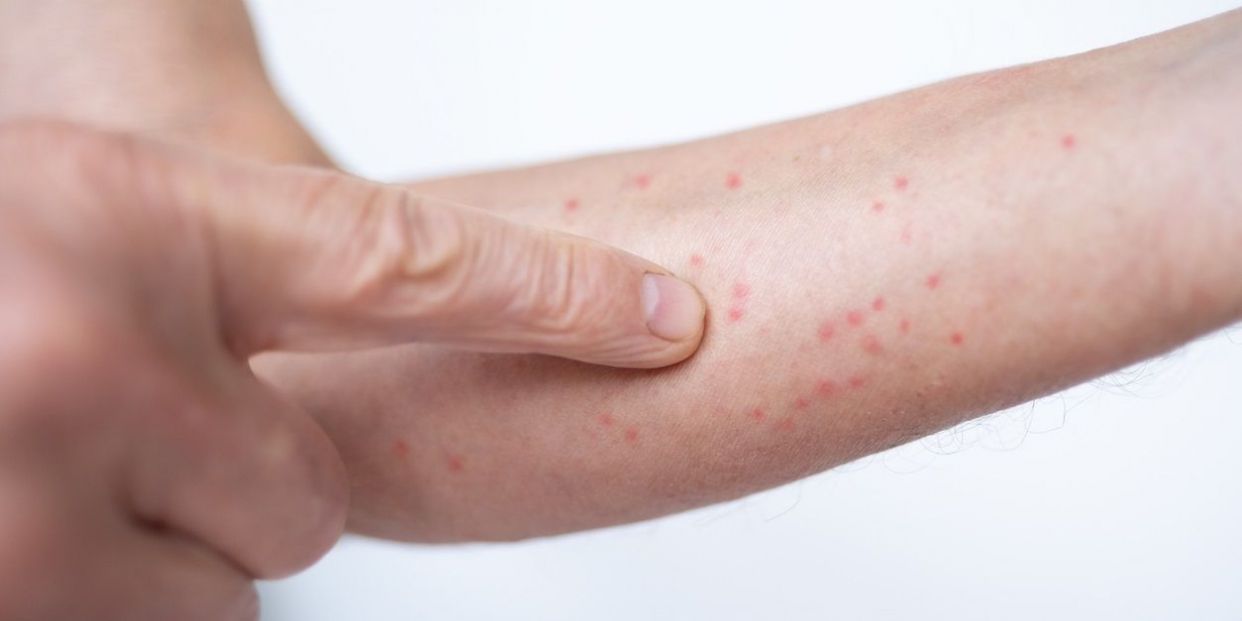
The researcher at the Carlos III Health Institute (ISCIII) Álvaro Roy has warned of the increase in the incidence of scabies in Spainwhere the annual incidence rate has increased almost 50 times in the last 13 years, reaching 6,300 per million inhabitants.
Roy presented these data during a conference held at the ISCIII on the occasion of World Neglected Tropical Diseases (NTD) Day, which was commemorated on January 30, based on a study coordinated by the National Center for Epidemiology (CNE).
The study reveals a concentration of cases among young people between 15 and 24 years old and among those over 74 years old. “In the case of outbreaks, homes were the most frequent places, while nursing homes were the second,” the researcher noted.
According to the research, scabies has been increasing in Spain since 2011, with a strong acceleration starting in 2020. In Primary Care, cases increased an average of 66 percent annually between 2020 and 2023. Likewise, nursing assistants and other health professionals were the occupations at highest risk.
Regarding the rate of hospital episodes due to neglected tropical diseases, cystic echinococcosis occupies first place, with a average annual rate of 3.10 episodesfollowed by scabies (1.38), Chagas disease (1.20) and leishmaniasis (0.90).
More than a billion people suffer from NTDs in the world
During the day, ISCIII researcher Isra Cruz explained that tropical diseases neglected are grouped under that term because they fundamentally affect disadvantaged populations living in tropical and subtropical regions and are diseases that are neglected in terms of research in order to develop tools for their control.
“These diseases affect more than one billion people around the world. One in six people in the world is affected by one of these diseases and the highest burden of disease occurs in sub-Saharan Africa,” he detailed.
In this context, he recalled that the WHO’s objective for 2030 is to reduce by 90 percent the number of people who need interventions against these diseases, reduce disability-adjusted life years by 75 percent, and eradicate two diseases.
Most medicines are not marketed in Spain
For his part, Dr. Moncef Belhassen, from the Spanish Society of Tropical Medicine and International Health (SEMTSI), has presented the preliminary data of a study that has evaluated access and coverage of essential medicines for the management of neglected tropical diseases in the National Health System.
The work has analyzed the majority of drugs used for this type of diseases, specifically, 63 medications and 41 active ingredients. According to early research data, most of these medications They are not marketed in Spain: “Which demonstrates the fragility of our country to manage it on a regular basis,” Belhassen pointed out.
Besides, 66 percent of medications are taken orally and the hospital pharmacy is the main dispensing point. There is also great variability in the stock of medicines between the different autonomous communities. “52 percent of the medicines used for these diseases are not in stock in Spain (…). A minimum stock should be mandatory, a law that would require a minimum for certain pathologies in all hospitals,” added the researcher.
“In general, I think the system is complex and cumbersomeso we surely need to simplify it in a clear and obvious way. This is the objective that we have to set for ourselves in the coming years,” concluded Belhassen.
Spanish coalition for neglected tropical diseases
The Spanish Coalition for Neglected Tropical Diseases (CEETD) was also presented at the event, a new alliance promoted by the Anesvad Foundation together with the Carlos III Health Institute (ISCIII), ISGlobal and Mundo Sano, which brings together 14 organizations and entities in the sector and which was born with the objective of coordinating efforts, making these diseases visible and mobilizing resources, knowledge and political will in Spain.
“Our mission is to work together to make neglected tropical diseases visible. In addition to supporting work in prevention, control and elimination and extend these efforts internationally“, detailed Larraitz Ventoso, from the Anesvad Foundation.
After this, Ventoso recalled that, according to the latest data published by the WHO, between 2018 and 2023 has been reduced by 41 percent financing for these diseases. “For this reason, we believe that it is a unique and critical moment,” he added.
Finally, he called on public administrations, political leaders, cooperation agencies and private entities. “To support this effort with resources, financing and spaces for advocacy. Because without sufficient financing, without robust public policies and without real coordination, neglected tropical diseases will continue to be neglected,” he concluded.
[ad_2]
Source link