[ad_1]
An international team of researchers led by the Cancer Research Center (CIC) has identified a bacterial mechanism is capable of destroying tumor cells, through a protein secreted by the bacteria Vibrio choleraewhich opens the door to new treatments.
The study, published in the journal Cell Death Discoveryhas shown how the HapA protein, produced by the aforementioned bacteria, acts as a “key” able to locate “locks” specific receptors, known as PAR-1 and PAR-2 receptors, which are found on the surface of tumor cells and, when opened, a chain reaction is caused within the cells that leads them to self-destruct.
“This work demonstrates the potential of bacterial proteins as antitumor therapeutic tools. The selective action and the mode of intracellular activation open new perspectives for developing combined and specific treatments,” stressed the CSIC researcher at the Cancer Research Center (CIC-CSIC-University of Salamanca). Antonio Hurtado.
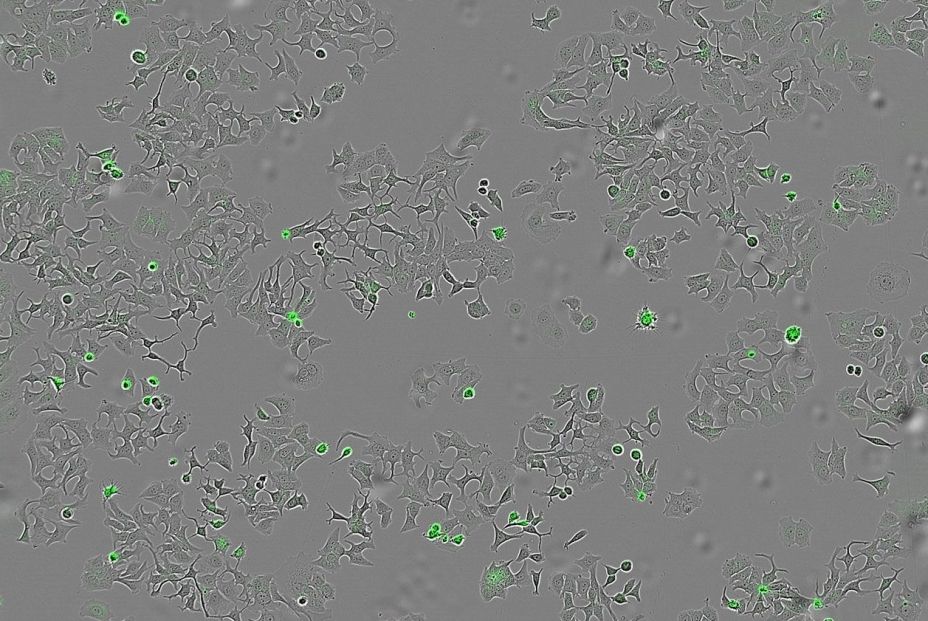
When developing this research, we have cultivated a normal strain and a mutant strain genetically modified bacteria Vibrio choleraeand subsequently supernatant, the liquid where these bacteria grow and which also contains the proteins and substances released by the bacteria, was collected and then applied to human cancer cells of the colon, breast and pancreas to observe what effects it produced.
The scientists have used both the original bacterial culture and harmless bacteria artificially modified to produce only HapA, demonstrating that the effect is actually caused by this specific protein and not by other possible factors of the bacteria. Furthermore, they have also compared the results with the supernatant of a different bacteria that does not produce HapA, such as Escherichia coli.
“What we sought was to check if human cells from different types of tumors (breast, colon and pancreas) were still alive and if they could multiply after being in contact with these bacterial substances, in particular with the HapA protein,” he explained. Hurtado.
To gain a greater understanding of how HapA works, they have used techniques that allow special markers related to the PAR-1 and PAR-2 receptors to be introduced into cancer cells, and tests have been used to detect protein activation indicating cell death.
Similarly, the internal pathways of the cell that control survival and death, known as MEK-ERK pathways, have been studied and drugs have been applied that block these pathwayssuch as trametinib, to confirm that cell death depended on these signals.
During the process, they have used advanced systems real-time imaging that allows counting live and dead cells, and measuring apoptosis to precisely observe the blockage of the pathways. The research has received funding from the Swedish Research Council, the Swedish Cancer Society, the European Union and Umea University (Sweden).
[ad_2]
Source link