
[ad_1]
Hospital admission can become a particularly complex experience for older people. who suffer from several chronic diseases, a situation known as multimorbidity. In these patients, the risk of complications during hospitalization increases significantly, especially the appearance of pressure ulcers, severe pain or delirium, a set of problems known as the “UDD triad.” These complications not only deteriorate the patient’s quality of life, but also increase the length of hospital stay and the risk of mortality.
In order to anticipate these adverse eventsa multidisciplinary team of researchers has developed a clinical prediction rule based on Artificial Intelligence techniquesas reported by the Malaga Biomedical Research Institute (Ibima) in a statement.
The project has been promoted by the research group on Chronicity, Dependency, Care and Health Services of Ibima Plataforma Bionand, led by the professor of the Faculty of Health Sciences of the University of Malaga José Miguel Morales Asencio. The researcher Marta Aranda, nurse from the Costa del Sol Health District and responsible for the clinical phase of the project, as well as specialists from the Institute of Software Technologies and Engineering (ITIS) of the University of Malaga, among them Rafael García-Luque and professors Ernesto Pimentel and Francisco Durán, also participated in the study.
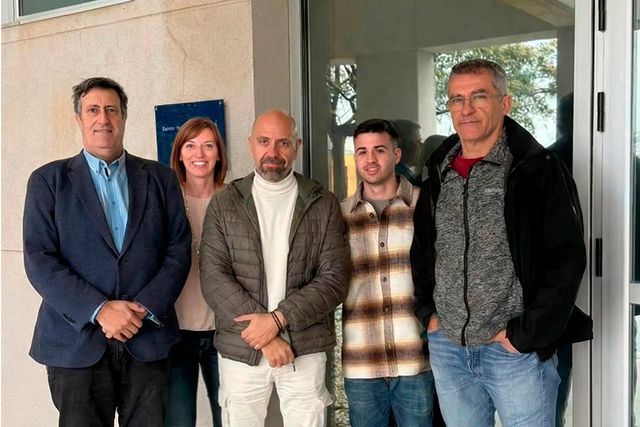
The collaboration of the Costa del Sol University Hospital has been key to the development of the clinical phase of the research, where the data necessary to build the predictive model was analyzed.
The results of the study, recently published in the scientific journal Intelligent Medicinestand out for the simplicity and speed of application of the system. Until now, predicting complications in environments such as the Emergency Department was complicated due to lack of time and the complexity of the available tools.

In the first phase, the researchers They evaluated up to 43 clinical variables of the patients. However, using advanced machine learning techniques, they managed to simplify the model until they identified only three fundamental indicators capable of predicting the risk of complications.
Thanks to this simplification, the system achieves an accuracy of 91% and a high discrimination capacity, surpassing the traditional methods used until now.
Three keys to anticipate complications
The model is based on three factors that healthcare personnel can quickly evaluate in the Emergency Department. The first is the presence of sudden changes in the patient’s mental state.such as confusion or alterations in attention, which may indicate delirium. The second is the level of painmeasured using a simple numerical scale. And the third is the patient’s communication skills.which allows assessing their degree of vulnerability in the hospital environment.
According to the group’s principal investigator, José Miguel Morales Asencio, “simplifying the model to just three predictors allows it to be used in situations of high care pressure, such as Emergencies, where every second counts.”
A web application to support professionals
In addition to the theoretical model, the team has developed a prototype of a web application accessible from mobile phones, tablets and computers. This tool allows healthcare professionals register the patient and obtain immediately an estimate of the risk of suffering complications during your hospital stay.
The application It has already been evaluated by 21 health experts from Malagawho have highlighted its ease of use and its usefulness for the daily clinical monitoring of patients.
The ultimate goal is for this technology to be integrated into regular healthcare practice to personalize care from the first moment and prevent the appearance of complications such as pressure ulcers or delirium.
The project has received funding from the Ministry of Science and Innovation and the Ministry of Health, Presidency and Emergencies of the Government of Andalusia, consolidating Malaga as one of the leaders in the development of digital health solutions and in research on chronicity.
[ad_2]
Source link