
[ad_1]
A study led by researcher Karen Giménez Orenga, from the Gene Expression and Immunity Group of the Catholic University of Valencia (UCV), suggests that ancient viruses integrated into human DNAknown as human endogenous retroviruses (HERV)could become “key” biomarkers for the diagnosis and monitoring of diseases such as chronic fatigue syndrome -also known as myalgic encephalomyelitis-, fibromyalgia and persistent covid.
The research has included the analysis of blood samples from 302 patients with a defined clinical diagnosisdistributed in four independent experimental studies. The results point out the potential of HERVs and other related viral elements as tools with discriminatory capacity between pathologies that share similar symptoms, as reported by the academic institution in a statement.
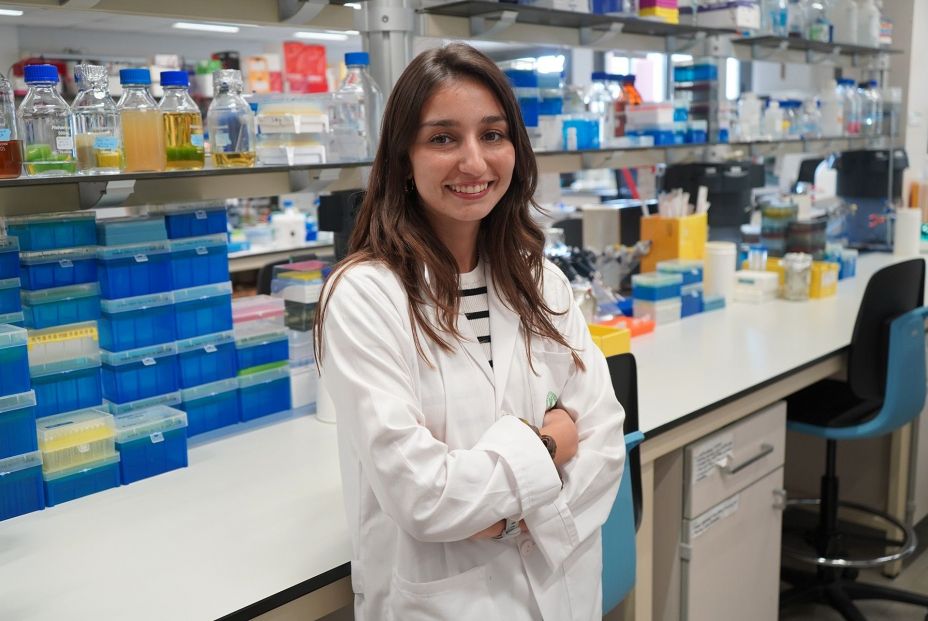
According to the UCV, “HERVs are sequences from ancient viruses that They infected our ancestors and were integrated into the DNAtransmitted from generation to generation until the present day.” For decades they were considered “junk DNA” because they did not encode proteins like classical genes. However, today it is known that They fulfill regulatory functions and can influence the immune response.
The study shows that the activation of these retroviruses “It is not a one-time phenomenon, but can persist over time and be linked to alterations in the immune system and a greater intensity of symptoms in patients with myalgic encephalomyelitis, fibromyalgia and persistent covid.”
According to the researcher, the results “open the door to look beyond the coding genes and to explore other genome sequences“, although he insisted that these are preliminary data that must be validated in “larger” cohorts.
One of the jobs, focused on covid-19 and persistent coviddetected the sustained presence of the HERV-W ENV protein even months after infection. This persistence could be related to sustained inflammatory activation when the immune system fails to return to its basal state, which would contribute to symptoms such as chronic fatigue.
The analysis of inflammatory markerscytokine levels and other clinical parameters also made it possible to molecularly distinguish the persistent covid condition from chronic fatigue syndrome and fibromyalgia. Although the clinical picture may seem “very similar”, the biological profiles show “relevant differences.”
Personalized therapeutic strategies
Another line of work allowed classify patients with myalgic encephalomyelitis into subgroups according to the degree of HERV activation, which helps explain the heterogeneity of the disease and the different severity of symptoms. This approach could facilitate “more personalized” therapeutic strategies in the future.
In parallel, the study of the blood virome revealed that the Torque Teno Mini Virus 9 (TTMV9) appeared “in greater quantities” in a subgroup of patients with greater immune alterationsuggesting that in some cases “there could be a weakened antiviral response.” Although these findings have not yet translated into an available diagnostic test, they “lay the foundation for the future development of clinical tools based on molecular biomarkers.”
The research is part of Karen Giménez’s doctoral thesis, defended at the UCV, and has combined laboratory work with specialized clinical collaboration. The obtaining and characterization of the patients was carried out together with the Biobank for Biomedical and Public Health Research of the Valencian Community (IBSP-CV) and with clinical professionals who are experts in myalgic encephalomyelitis.
The project has counted with public and private financingincluding predoctoral grants from the VALi+d program of the Generalitat Valenciana and the support of the British organization ME Research UK, in addition to regional and university funds. During this period, the researcher has completed stays at the University of Cagliari (Italy) and the University of Oxford (United Kingdom), and has consolidated collaborations with international teams such as that of researcher Hervé Perron at GeNeuro.
The UCV researcher is confident that, although research advances progressively, knowledge about these complex pathologies continues to grow and each finding contributes to improving their understanding and clinical approach.
[ad_2]
Source link