[ad_1]
An international team of European researchers has published a study in Journal of Molecular Medicine that provides new keys to understanding the early growth of abdominal aortic aneurysma serious and life-threatening cardiovascular disease.
The abdominal aortic aneurysm consists of a abnormal dilation of the body’s main artery and usually evolves silently. Its rupture has a high mortality rate, so improving the ability to predict its evolution is one of the great challenges of cardiovascular medicine.
Among the main cardiovascular risk factors associated with abdominal aortic aneurysm are the advanced age (over 65 years)male sex, smoking and a higher body mass index (BMI).
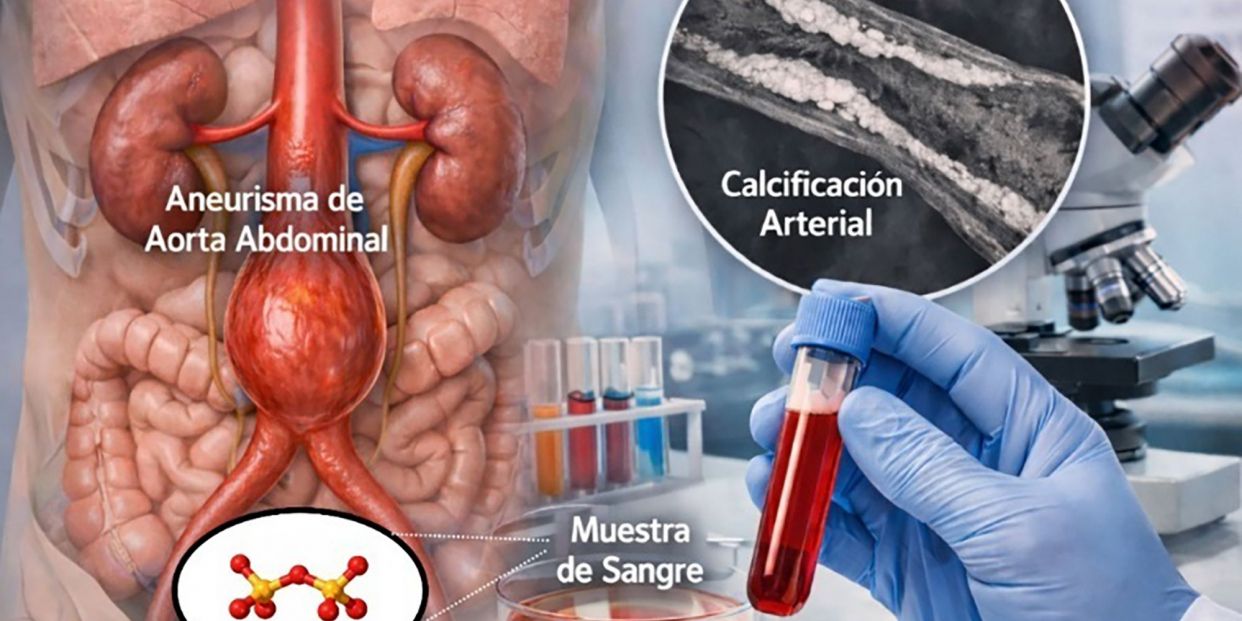
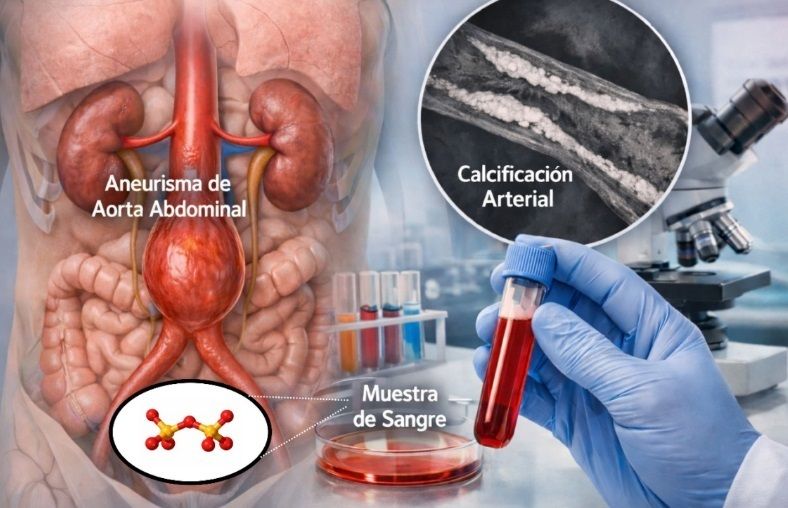
The study analyzes blood samples of European patients and shows that Circulating alkaline phosphatase activity and pyrophosphate degradation -a molecule that protects against calcification of the arteries- are associated with the early growth of abdominal aortic aneurysm. The results reveal an inverse relationship between the degradation of pyrophosphate in the blood and aneurysm growth, suggesting that certain calcification processes could play a role. a modulating or potentially stabilizing role of the aortic wall in some patients, although more studies will be necessary to confirm this. International research.
The work has been developed in collaboration with research centers and hospitals in Denmark and Spain, using data from a European population cohortand has been scientifically directed from the University of Santiago de Compostela. “Currently, the monitoring of aneurysms small ones is based almost exclusively on imaging tests. Our results open the door to identifying biological processes measurable in blood that could help predict its evolution in the future,” explains Ricardo Villa-Bellosta, principal investigator of the study.
Currently, Surgery is the only treatment capable of preventing aneurysm rupturebut it is only indicated when the dilation reaches a large size. For small aneurysms, periodic monitoring is the only clinical option. In this context, the study published in Journal of Molecular Medicine provides a scientific basis for the future development of blood biomarkers that allow improving risk stratification and personalized follow-up of patients with aneurysm of the abdominal aorta.
The authors emphasize that, although this is a pilot study, the results justify carrying out new larger-scale clinical studies that confirm these findings and evaluate their possible clinical application.
[ad_2]
Source link