[ad_1]
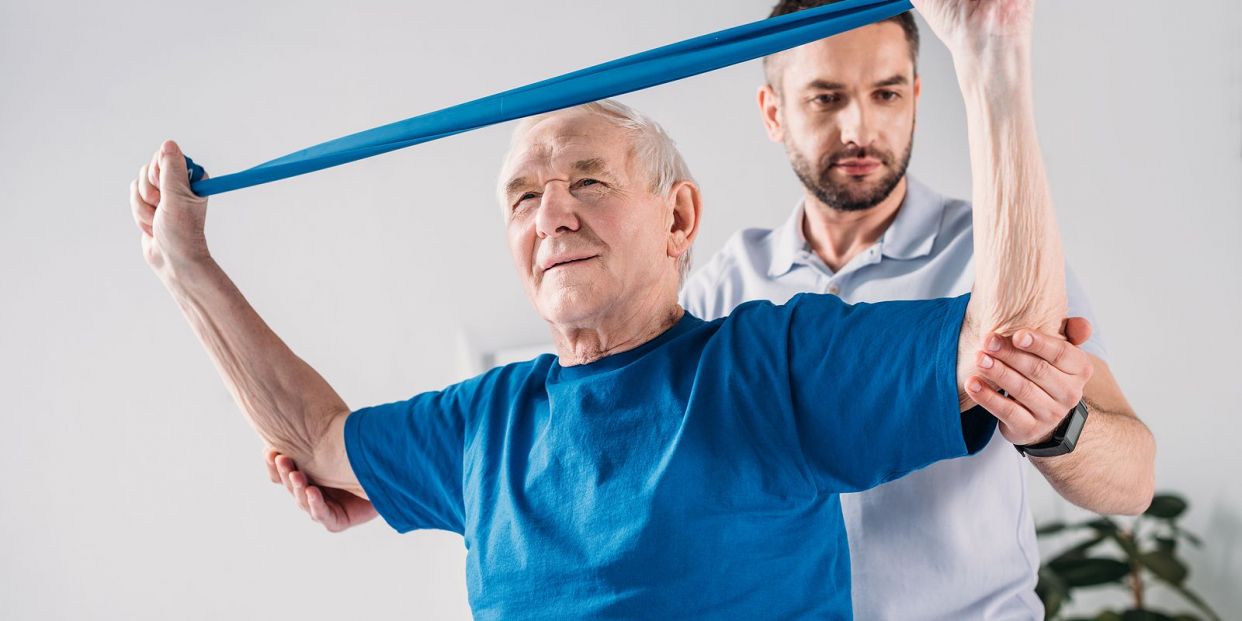
A simple and accessible strength training programbased on elastic bands and exercises with your own body weightsignificantly improves the attention and the inhibitory control in older people cognitively healthy.
This is the main conclusion of a randomized clinical trial led by researchers from the Department of Physical and Sports Education and the Joint University Sports and Health Institute of the University of Granada.
The intervention, carried out three times a week for six monthsshowed especially positive effects on the participants more vulnerable to cognitive decline.
The study, titled Active Gains in Brain Using Exercise During Aging (AGUEDA)had the participation of 90 people between 65 and 80 years old from the city of Granada, who were randomly assigned to a strength training group or to a control groupwho maintained his usual lifestyle.
Before and after the program, the physical condition and diverse cognitive functionslike the memorythe attention and inhibitory controlthe processing speed and the executive functions.
Specific cognitive benefits
The results, published this Wednesday in one of the reference journals in neurologyreveal that the training produced a selective improvement in attention and inhibitory control.
These capabilities are key to filter distractions, manage automatic responses and process information efficiently in everyday life. However, no significant improvements were observed in other areas analyzed, such as episodic memorythe processing speed or the general executive functions.
The detailed analysis further indicates that the cognitive benefits were more pronounced in subgroups with a higher potential risk of impairment, such as people of older agewith lower educational level or that they manifested more subjective memory complaints.
Body and mind: a close relationship
In parallel to the cognitive impact, the exercise program achieved improve muscle functiona fundamental aspect for maintain autonomy in advanced ages.

The researchers point out that this increase in strength is positively associated with improvements in executive function, episodic memory and working memory, reinforcing the idea of a direct link between physical and brain health.
The main researcher, Irene Esteban-Cornejo, highlights that this type of intervention can be especially relevant for populations at higher risk of cognitive impairment.
For their part, Beatriz Fernández Gámez and Patricio Solís Urra, authors of the work, highlight the potential of strength training like a preventive strategy, safe, economic and easy to implement in community settings, which would facilitate its large-scale application.
The study reinforces the importance of carrying out comprehensive cognitive assessments to detect specific effects of exercise and confirms the value of physical exercise as a non-pharmacological tool to promote a healthy brain aging.
[ad_2]
Source link