[ad_1]
The incidence of flu has collapsed in primary care, although the virus continues to strain hospitals.
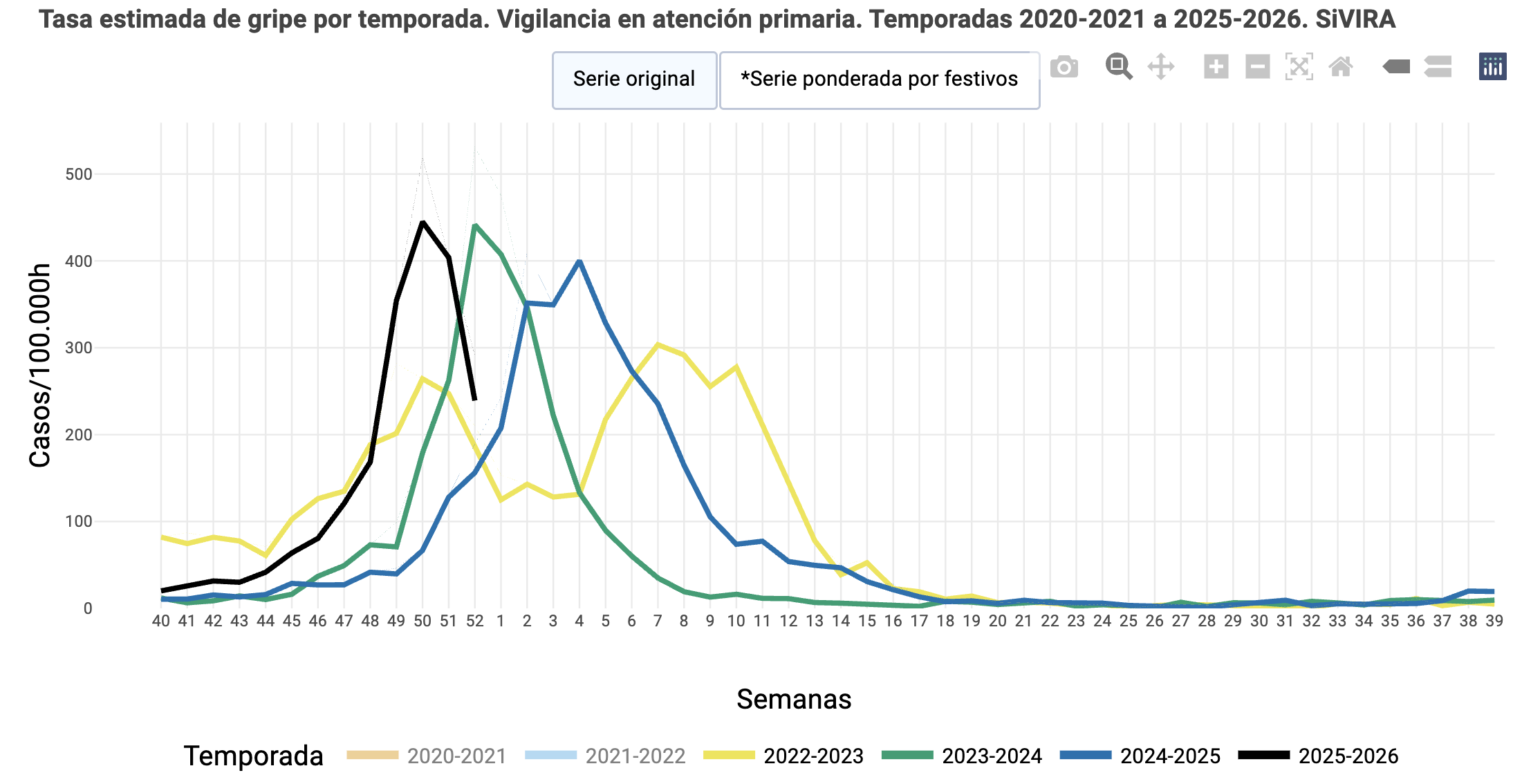
According to the latest report of the Carlos III Health Institute (ISCIII), from December 22 to 28, 2025, the detected cases decreased almost 60%, from 193.3 per 100,000 inhabitants to 105.
Furthermore, in parallel, the positivity of the tests carried out decreased, which went from 48.2% to 41.7%, as well as the estimated total incidence, which measures the level of transmission of the virus, which stood at 239.2 cases – 403.9 the previous week.
On the other hand, in hospitals, the situation It was not so positive. And the fact is that, although the speed with which the hospitalization rate was increasing has reduced – which usually indicates that the peak is being reached – this indicator has not yet collapsed, as has happened in health centers.
Specifically, it continued to increase the week ending December 28, going from 9.4 to 9.9 cases per 100,000.
An atypical season
It should be remembered that this 2025-2026 season is being atypical, since it has been brought forward by about a month in the northern hemisphere, due, in part, to the expansion of a flu mutation, known as subclade k H3N2, which has caused the incidence to reach maximums not recorded in the last 5 years, reaching, at the moment of greatest expansion, at a rate of 445 cases for every 100,000 inhabitants.
Of course, these record levels have been reached in primary care, but not in hospitals. Although in these last centers high figures have been reached compared to other years – already the peaks of other seasons would have been exceeded, such as that of 2024-2025 (7.3/100,000) or 2022-2023 (4.2/100,000) –, it is still far from the maximum rate recorded in 2023-2024, which was 16.6 cases/100,000.
The season is not over yet
On the other hand, it should be noted that, although the trend of the curve is currently decreasing, that does not mean that the epidemic is over or that the risk of contagion has disappeared.
In this sense, the recommendations made by the authorities of get vaccinated and protect yourself –especially if it is vulnerable– are still valid.
The dose against the virus, which is the most effective weapon available to avoid serious cases, is recommended for the following groups:
- 60 years or more.
- Minors under 60 years of age with risk conditions.
- Pregnant women.
- Health center staff.
- Workers of essential public services such as State Security Forces and Corps or firefighters.
- Smoking people.
- People with direct occupational exposure to animals.
- Child population.
- Minors between 6 and 59 months.
At the beginning of December, the first results of the Sanofi Gripometer 2025-2026, which revealed that the percentage of people over 65 years old already vaccinated against the flu this year in Spain reached the 56.1%while in the population between 60 and 64 years old it reaches 24.7%both figures very similar to those last year on the same dates, located in the 56.3 and 25.3%, respectively.
Protect yourself from infection
In addition, there are hygiene measures that can be applied, especially if you are in the presence of very vulnerable people. These are some tips from the Spanish Society of Emergency Medicine (SEMES):
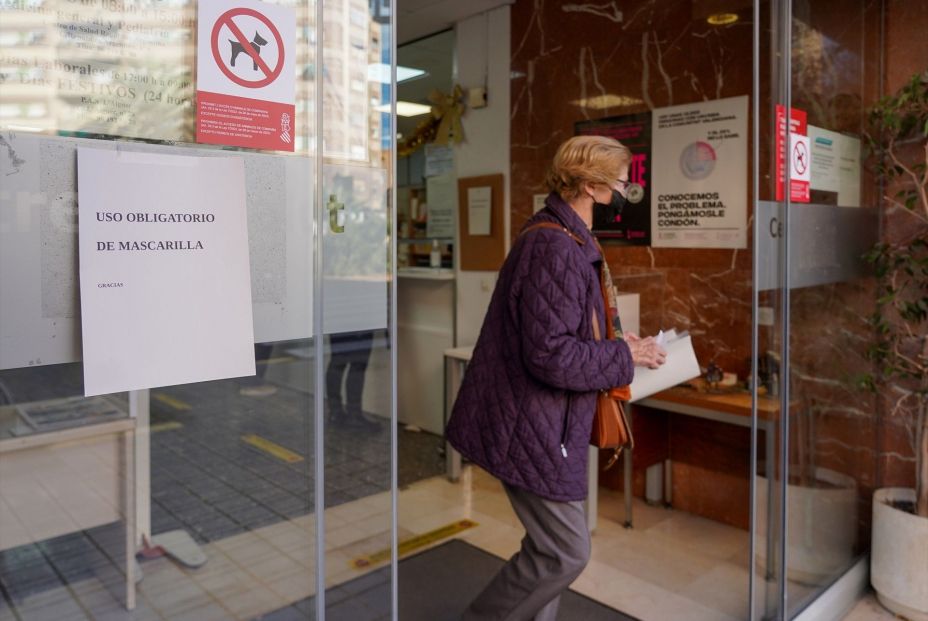
- Wear a mask if you have symptomsespecially in poorly ventilated spaces, and in the presence of vulnerable people or when working with patients with compatible conditions.
- Wash your hands frequently: before eating, handling food, after leaving the bathroom and after blowing your nose or coughing.
- Cover your mouth and nose when sneezing or coughing: If you can with your arm or a tissue instead of your hand.
- Use disposable tissues: Throw them away after each use, do not store used ones or leave them on tables or nightstands.
- Avoid kisses and very close contactas well as sharing glasses, cutlery, towels and other objects that may have been in contact with saliva or secretions.
- If there is someone in your house with the flu, clean common surfaces more frequently (doorknobs, sinks, handles) with the usual cleaning products and ventilate the rooms more often by opening the windows.
- Lead a healthy life: sleep well, eat healthy, drink water, physically active, avoid alcoholic beverages and tobacco. It is also advisable to shower with hot water and humidify the air.
[ad_2]
Source link