
[ad_1]
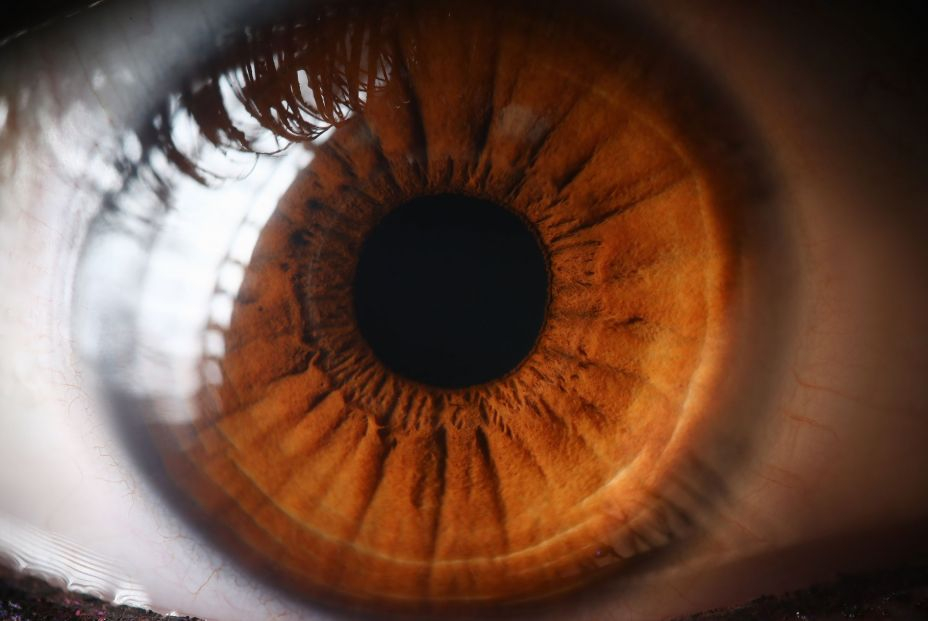
A research led by the Institute of Neurosciences (IN), a joint center of the Higher Council for Scientific Research (CSIC) and the University Miguel Hernandez (UMH), has tried an experimental molecule which is activated by apply blue light and? could relieve dry eye symptoms.
The compound, called DENAQ, is first applied to the sensory nerves of the cornea, the transparent layer that covers the front of the eye. In animal modelshas shown “to be able to reduce the excessive activity of these nerves without affecting essential functions such as blinking.”
Furthermore, as detailed by the IN CSIC-UMH in a statement, “it is the first time that it has been demonstrated that a photosensitive molecule can control the nervous activity of the cornea using light.” “This finding opens the door to new non-invasive light-based treatments, known as optopharmacology,” he noted.

Dry eye is a disease of the ocular surface that occurs when the eyes do not produce enough tears or they are of poor quality, which causes symptoms such as dryness, burning, itching, a gritty sensation and blurred vision.
In Spain, according to a recent report, dry eye disease could affect the 30% of the population and an increase in cases is detected in people under the age of 30 years. In this sense, DENAQ is a photoactive compound originally developed to confer light sensitivity in nerve cells, such as retinal ganglion cells, which are responsible for sending visual information to the brain so that a person can see.
Application to sensory nerves of the cornea
In this new work, the IN team applies it for the first time to sensory nerves of the cornea, which represents a “novelty” in its experimental use. The electrical activity of the nerve endings that detect cold in the cornea is “essential” to maintain the health of the ocular surface, as it regulates blinking and tear production. However, when this activity becomes excessive, as occurs in cases of dry eye, it can cause persistent discomfort.

A new study led by researcher Victor Meseguerwho co-directs the IN Ocular Neurobiology Laboratory, demonstrates that a light-sensitive molecule called DENAQ can modulate this nervous hyperactivity by applying blue light, reducing abnormal signals without eliminating normal sensitivity to cold.
“The most interesting thing is that light does not block the function of these nerves, but rather returns it to normal. In dry eye conditions, the endings are firing exaggeratedly and in the presence of the optopharmaceutical with light we manage to return their activity to healthy levels,” explained Meseguer.
Experiments
The work, published in the magazine British Journal of Pharmacologyshows that DENAQ acts as a chemical switch: by changing shape under blue light, it modulates the ion channels of corneal neurons and reduces their excitability.
The experiments, made in guinea pig and rat modelsconfirmed that this effect is maintained even in corneas with induced dryness, without altering the normal response to the cold stimulus.
The use of DENAQ allows precise control of nervous activity peripheral through a light stimulus. This ability to adjust nerve excitability offers an unprecedented level of control in sensory structures such as the cornea, where the protective function must remain active, but avoiding overstimulation that causes pain or irritation.
The possibility of acting only on the affected area and in a reversible manner makes this strategy “in a promising alternative to conventional pharmacological treatmentswhich often present side effects or loss of sensitivity”, according to the IN CSIC-UMH.
“More specific” drugs
Likewise, the study provides a “new understanding” of the molecular mechanisms of corneal receptors. The researchers verified that the molecule enters the nerve endings through P2X3 channels, structures that until now had not been described with this role in the cornea. what opens the way “to the design of future more specific photosensitive drugs.”
This approach is part of the emerging field of optopharmacology, which allows modulating the activity of the nervous system through light without the need for genetic manipulation, unlike optogenetics.
“This is the first time that it has been shown that a photosensitive molecule can control the nervous activity of the cornea with light.”. “It is a very solid proof of concept to develop therapeutic strategies based on optopharmaceuticals,” he highlighted. David Aresfirst author of the article.
In this context, Meseguer has stressed that “these results reinforce” the idea that peripheral nervous activity can be controlled “in a localized, precise and reversible manner, using light-sensitive drugs” and that, “in the future, it could serve to alleviate symptoms of dry eye or other peripheral neuropathies.”
The DENAQ molecule was synthesized in collaboration with the professor’s group Richard H. Kramer from the University of Berkeley (California), an “international reference” in the development of photosensitive compounds that had characterized the photodynamic properties of the molecule and its activity in retinal ganglion cells, as highlighted by the IN CSIC UMH.
This work has been possible thanks to funding from the State Research Agency, which depends on the Ministry of Science, Innovation and Universities, as well as the Next Generation program of the European Union (EU) and the Department of Education, Culture, Universities and Employment of the Generalitat Valenciana.
[ad_2]
Source link