[ad_1]
A study led by researchers at Oxford Population Health’s Cancer Epidemiology Unit, and funded by the World Cancer Research Fund, has found that Vegetarian diets are associated with a lower risk of breast, prostate, kidney, pancreatic, and multiple myeloma cancers.but with an increased risk of squamous cell carcinoma of the esophagus.
The study, which has been published in the British Journal of Cancer and illustrated by Europa Press, is the largest ever conducted on meat-free diets and cancer risk. They compared the risk of 17 different types of cancer in five diet groups: meat consumers, poultry consumers (they do not eat red or processed meat), pescetarians (they eat fish), vegetarians (they consume dairy products and/or eggs) and vegans.
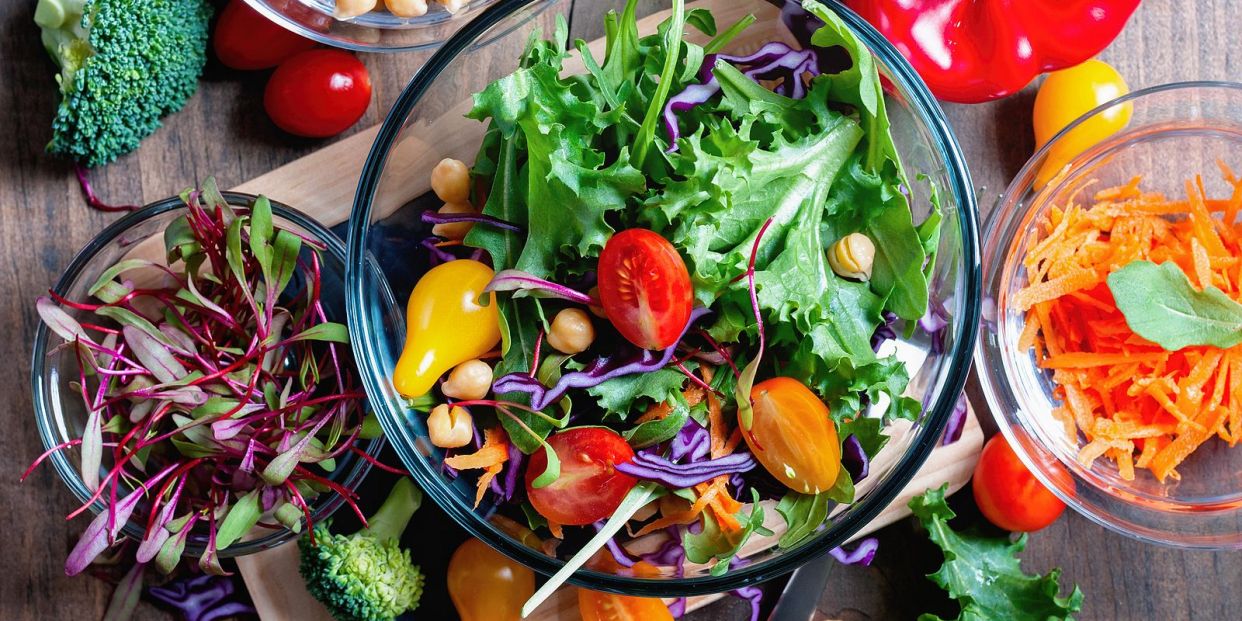
Well-planned vegetarian diets are considered healthybut there has been uncertainty about how these diets influence the risk of specific cancers, mainly because individual studies do not include enough vegetarians. To address these questions, researchers They collected data from more than 1.8 million people from three continents through the Vegetarian Cancer Risk Consortium.
According to the study, compared to carnivores, vegetarians had a 21 percent lower risk of pancreatic cancer; 9 percent lower risk of breast cancer; 12 percent lower risk of prostate cancer; 28 percent lower risk of kidney cancer; 31 percent lower risk of multiple myeloma.
However, vegetarians had almost double the risk of squamous cell carcinoma of the esophagus. There were no statistically significant differences in the risk of colorectal, stomach, liver, lung (in never smokers), endometrial, ovarian, mouth and pharynx, or bladder cancer, or non-Hodgkin lymphoma, leukemia, and esophageal adenocarcinoma in vegetarians.
“Cancer is one of the leading causes of death worldwiderepresenting almost one in six deaths. Dietary patterns that prioritize fruits, vegetables, and high-fiber foods, and avoid processed meat, are recommended to reduce cancer risk. “Our study helps clarify the benefits and risks associated with vegetarian diets,” said Tim Key, Emeritus Professor of Epidemiology at Oxford Population Health and co-investigator of the study.
Vegans have a higher risk of colon cancer
Vegans had a statistically significantly increased risk of colorectal cancer (of intestine) compared to carnivores. For the other cancer types studied, there was no evidence that the risk in vegans was different from that of meat-eaters, and for some less common cancers, vegan cases were insufficient for analysis. More studies are required to confirm these results in the vegan population.
“The vegetarians They tend to consume more fruit, vegetables and fiber than carnivores and do not consume processed meatwhich could contribute to a lower risk of some types of cancer. The increased risk of esophageal squamous cell carcinoma in vegetarians and intestinal cancer in vegans could be related to a lower intake of certain nutrients more abundant in foods of animal origin,” warns Aurora Pérez Cornago, principal investigator of the study and former associate professor at Oxford Population Health.
While the pescetarians, who are the ones who follow a diet based mainly on foods of plant origin (fruits, vegetables, legumes, cereals, nuts), similar to vegetarian, but include fish and seafood as the only source of animal protein, they had a lower risk of breast and kidney cancer, as well as bowel cancer. Additionally, those who consumed poultry were found to have a lower risk of prostate cancer.
“Among the 72,000 vegetarians and vegans included in our study, the number of cases of some types of cancer was low, which limits the certainty of some findings. Furthermore, Nutrient intake and overall diet quality vary considerably within vegetarian populations and each other,” says Yashvee Dunneram, first author of the study and former postdoctoral epidemiologist at Oxford Population Health.
From the World Cancer Research Fund International, Deputy Director of Research and Policy, Dr Helen Croker, says: “This study provides the most comprehensive evidence to date on vegetarian and meat-free diets and cancer risk.”
“The results suggest that Meat-free diets are associated with a lower risk of some types of cancer, but not allwhich highlights important differences between types of cancer and the influence of different dietary patterns,” adds Croker, who recalls that the objective of this research is to provide “reliable evidence” for those considering consuming less meat in their diet.
Meanwhile, the Danish Vegetarian Society, a member of SAFE Food Advocacy Europe, welcomed the conclusions of this study, as it “demonstrates that diet must be taken into account when we talk about health and cancer risk.” For this reason, it requires policies that promote healthier diets, making it easier to choose healthy options.
“Diet can play a crucial role as a prevention factorespecially diets rich in a variety of vegetables and fiber. However, diet is not exclusively an individual responsibility, but is strongly influenced by social decisions,” says Katrine Ejlerskov, PhD in nutrition and director of the Danish Center for a Plant-Based and Organic Future.
“We must create a society where Healthy options are much better integrated into all aspects of life: from prices in supermarkets and public meals, to the education of professionals of health and the promotion of plant-based foods as a good business model for European farmers. “All of these measures can have a significant positive impact on public health,” he concludes.
[ad_2]
Source link