[ad_1]
Oxidative stress -a process related to aging and numerous chronic diseases- can mitigated through physical exercise programs supervised in hospitalized older people.
This is indicated by the secondary analysis of a randomized clinical trial that has evaluated the effects of a multicomponent exercise intervention using malondialdehyde (MDA), a biomarker of oxidative damage.
In this work, with the participation of Spanish universities, hospitals and research centers, the professor of Physiology at the University of Valencia, Consuelo Borrás, has participated.
Oxidative stress occurs when there is an imbalance between reactive oxygen and nitrogen species and the body’s antioxidant systems. This phenomenon is involved in multiple pathologies associated with aging and may contribute to the functional deterioration that is frequently observed during hospitalizations in older people.
The research team analyzed data from a clinical trial that evaluated a physical exercise program adapted to the initial functional capacity of the patients. The goal was to better understand the biological mechanisms that could explain the functional benefits previously observed with these types of interventions.
As Borrás explains in a statement, “the supervised exercise program produced improvements on several functional levels: on the one hand, the patients in the exercise group improved their physical capacity global, measured using the SPPB battery, a standardized test that assesses balance, walking speed, and the ability to get up from a chair; on the other hand, muscle strength gains were observed in the main muscle groups worked (legs, knees and upper body)”.
“This shows that even a program of just a few days can produce measurable muscle improvements in very elderly hospitalized patients,” he points out.
And he adds: “On a subjective level, patients in the exercise group They also reported an improvement in their perceived health status.which adds a personal and qualitative dimension to the observed benefits.”
On the other hand, it stands out in obtaining results that the benefits were not uniform: “In women, improvements were concentrated in leg strength and perceived well-being, while men gained upper body strength.
Besides, the level of oxidative stress with which each patient came to the study conditioned how much they could benefit from exercise: those who started from a healthier cellular state responded better functionally, which reinforces the idea that the biological profile of each person matters when designing these interventions,” emphasizes the professor of Physiology.
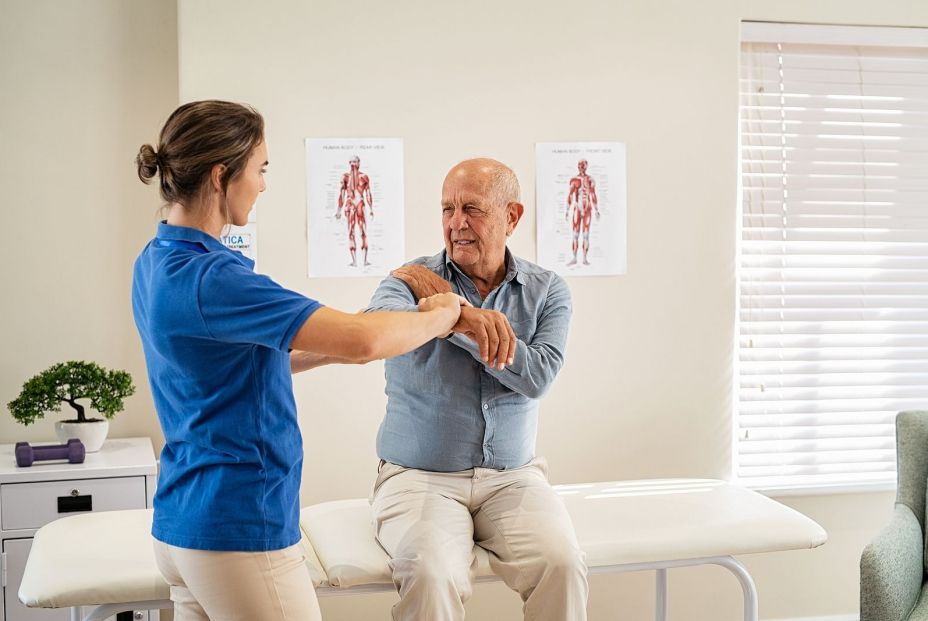
The study included 72 hospitalized patients with a mean age of 87 yearsof which 54% were women. The participants were randomly assigned to one of two groups: an exercise group, which carried out a supervised program for three days adapted to their functional level; and a control group, which received usual hospital care.
The researchers analyzed blood samples to measure levels of malondialdehyde (MDA) – an indicator of lipid peroxidation and oxidative damage – and total protein oxidation (PO).
Clear difference between groups
The results showed a clear difference between the groups. While MDA levels barely changed in the exercise group, the control group showed a significant increase during hospitalization. The difference between the two was -0.24 *mol/mL, a statistically significant result (p < 0.01).
Furthermore, subgroup analyzes revealed that the benefits were especially evident in women and patients with diabetestwo populations particularly vulnerable to the effects of oxidative stress.
Beyond the biological changes, the intervention was also associated to improvements in functional capacity and health status perceived by patients.
The research also found that people with lower initial levels of oxidative stress experienced greater improvements in the SPPB (Short Physical Performance Battery) compared to those with higher levels at the beginning of the study.
Towards more personalized interventions
The results suggest that structured physical exercise can play a relevant role to avoid increased oxidative stress during hospitalization in very old adults. According to the study, the relationship between initial oxidative status and functional improvement indicates that interventions could benefit from a more personalized approach, adapted to the biological profile of each patient.
Consuelo Borrás recognizes that this work opens several relevant lines of research: “First of all, It will be necessary to carry out studies in several hospital centers and with longer follow-upto know if the benefits observed during admission are maintained once the patient returns home.”
Secondly, he adds, “it would be advisable to expand analysis of other biomarkersalso including markers of inflammation, to better understand what biological mechanisms explain why exercise works and in which patient profiles the latter works with greater intensity.”
“And third, the results suggest that exercise programs should be personalized according to the level of oxidative stress and the sex of each patiente, since both factors clearly condition the response to the intervention. In this sense, slightly extending the duration of the program could translate into even greater benefits, both physical and cognitive,” he concludes.
Therefore, this study reinforces the growing evidence that adapted physical activity can be a key therapeutic tool to preserve cellular function and health in hospitalized older people.
[ad_2]
Source link