
[ad_1]
A research team from University of Valencia (UV) and La Fe Health Research Institute (IIS La Fe) has identified a mechanism that explains why some lung tumors with mutations in the EGFR gene stop responding to the targeted therapies most used today, as reported by both entities in separate statements.
The study, published in the scientific journal Cancer Lettersreveals a metabolic vulnerability that opens new therapeutic avenues to curb resistance to treatments and improve patient survival.
Lung cancer remains the leading cause of cancer mortality worldwide. In Spain, it causes more than 22,000 deaths annuallywhich is equivalent to ” one victim every twenty minutes“, they have detailed. Its treatment continues to be a “great challenge” due to the appearance of therapeutic resistance that reduces the effectiveness of the drugs and favors relapses.
The most common form, the non-small cell lung carcinoma (CPNM), represents about 85 percent of the cases. In some of these tumors, mutations are detected in the EGFR gene, a molecular switch that stimulates the uncontrolled growth of cancer cells.
This knowledge has allowed us to develop tyrosine kinase inhibitors (ITQ) -targeted drugs that block the abnormal activity of EGFR- and represents a “major advance” in treatment, increasing survival and improving the quality of life of patients. However, over time, many tumors stop responding to TKIs or develop resistance mechanisms, which reduces the effectiveness of these treatments and complicates the clinical management of the disease.
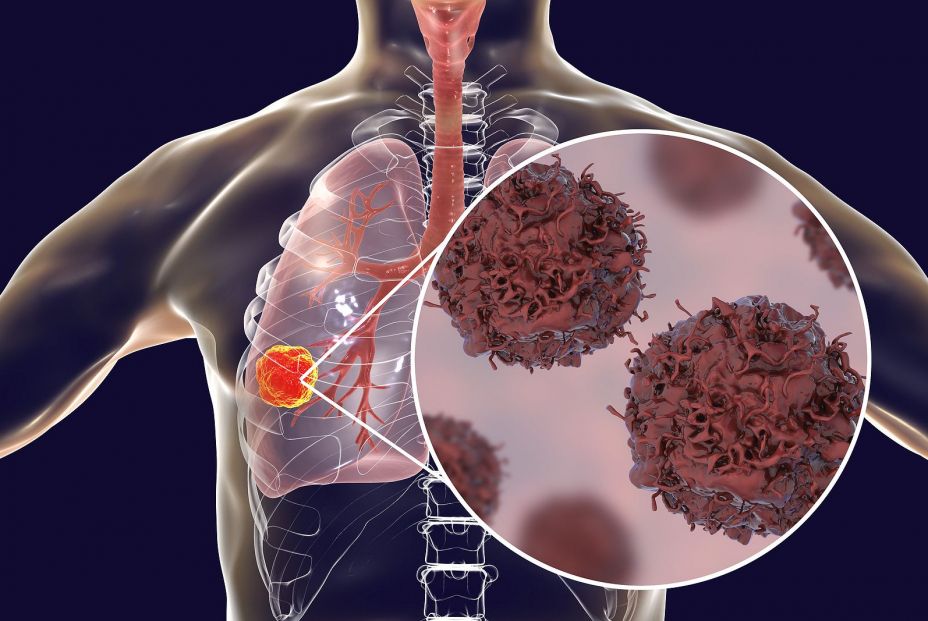
The study, led by the Department of Physiology of the UV and the IIS La Fe, demonstrates that resistant tumor cells overproduce the enzyme NNMT, responsible for altering the metabolism of vitamin B3. This change reduces the levels of a molecule essential for cell survival, NAD+, and forces cells to rely on another enzyme, NAMPT, to continue proliferating.
“Achilles heel”
“When we pharmacologically block NAMPT, cells resistant to anti-EGFR therapy stop growing both in cell cultures and in animal models,” he explained. Agustín Lahoz, researcher at IIS La Fe. “This allows us to identify a new Achilles heel that could be exploited, through combined therapies, to avoid relapses. However, its effectiveness will need to be confirmed in clinical trials before its application in medical practice,” he added.
In addition, the team has discovered a non-invasive biomarker, the metabolite 1-MNA, whose high blood levels are associated with a worse prognosis in patients treated with EGFR TKIs. Detectable through a routine blood test, this biomarker “could serve to predict the response to treatment and monitor the emergence of resistance in real time, facilitating more personalized clinical decisions.”
“This work demonstrates that collaboration between basic and clinical researchers accelerates the transformation of laboratory findings into new diagnostic and therapeutic tools that prolong the lives of patients and improve their quality of life,” concluded Julián Carretero, researcher in the Department of Physiology at the UV.
Clinical researchers from the Incliva Health Research Institute, the General University Hospital of Valencia and the Hospital de la Ribera.
[ad_2]
Source link