[ad_1]
An international research team, with the participation of the Catalan Institute of Paleontology Miquel Crusafont (ICP-Cerca), has described the oldest and most complete skeleton known so far of Homo habilisone of the first species of the genus Homo. The fossil has more than two million years old and provides key information to understand what our most remote ancestors were like physically.
Identified as KNM-ER 64061was recovered in East Turkananorthern Kenya. The first remains appeared in 2012 during an excavation campaign led by Meave Leakey of the Turkana Basin Institute. Years later, new surveys in the area allowed the recovery of additional fragments of postcranial bones.
The ICREA researcher from the ICP later joined the investigation. Ashley S. Hammond and the joint work has led to a study published in the scientific journal The Anatomical Record.
What makes this discovery unique is that it is the most complete postcranial evidence of Homo habilis known to date. That is, not only remains of the skull are preserved, but also bones of the body that allow us to describe more precisely. their body proportions and anatomical features.
What was the body of ‘Homo habilis’ like?
The analyzes indicate that the individual to whom the remains belong measured approximately 160 centimeters and weighed between 30.7 and 32.7 kilos. Compared to later species such as Homo erectuswas shorter and less robustalthough many details of the anatomy of the limbs already show similarities with more advanced human forms.
This set of features places Homo habilis in an intermediate position within human evolution, combining features reminiscent of both previous species and later members of the genus Homo.
One of the most notable aspects of the study is the analysis of the upper extremities. The forearm, in relation to the arm, was proportionally longer than in Homo erectusa characteristic that links it to older human relatives, such as Australopithecus afarensiswho lived more than a million years earlier.
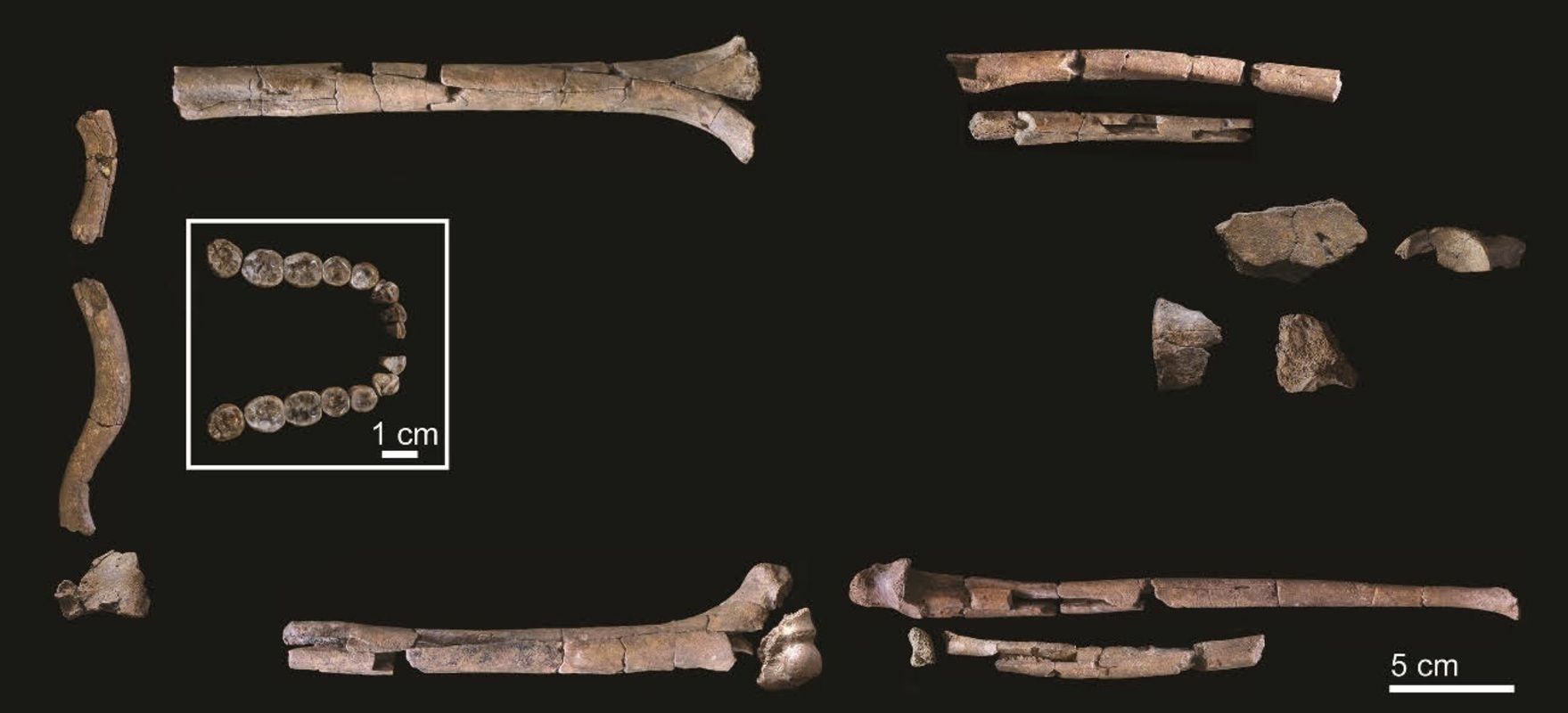
In addition, the bones of the shoulder and arm have unusually thick corticesthat is, outer layers of the bone that are denser than usual. This trait is similar to that observed in Australopithecines and other early fossils of the genus. Homoand constitutes valuable information to understand the anatomical diversity of early humans.
Although the characteristics of the upper limb of KNM-ER 64061 provide relevant data, the study highlights that there are still questions to be resolved. In Hammond’s words, “the constitution and proportions of the lower extremities remain an enigma“.
[ad_2]
Source link