
[ad_1]
The European project STOP IATRO is a pioneering initiative that aims reduce the adverse effects of medications and prevent loss of autonomy of older people during their hospitalization. The program is coordinated by the University Hospital of Toulouse, and experts from France, Spain and Portugal also participate in one direction: achieving healthier, safer and more autonomous aging.
Specifically, it is coordinated by the head of the Pharmacy Division of the University Hospital of Toulouse (France), Philippe Cestac. In Spain, the Health and Aging Foundation of the Autonomous University of Barcelona and the Andalusian Public Foundation for Biomedical and Health Research of Malaga (IBIMA BIONAND Platform), in collaboration with the Málaga-Guadalhorce Health District. Among the main researchers, the professional of the Multiprofessional Teaching Unit of Family and Community Care of the Málaga Guadalhorce Primary Care District and Principal Investigator of the Research Group stands out. Multimorbidity, adherence, economic evaluation and pallitive care in Primary Carefrom the Malaga Biomedicine Institute and Nanomedicine Platform (IBIMA BIONAND Platform), Francisca Leiva-Fernández.
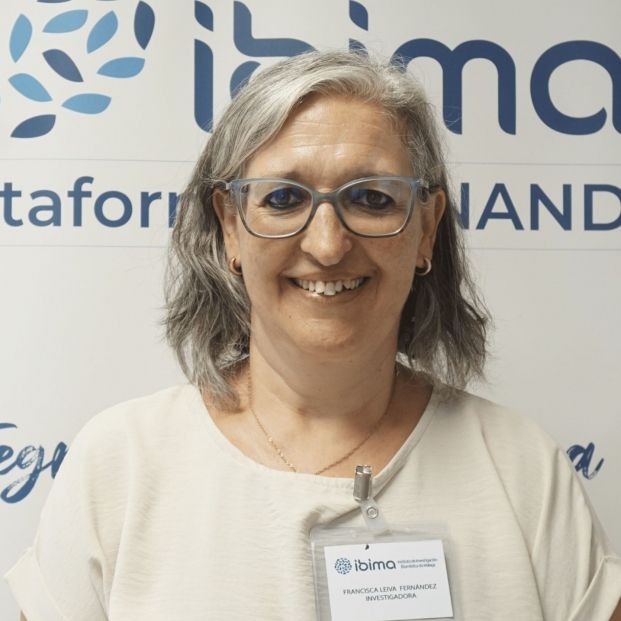
Francisca Leiva-Fernández, professional at the Multiprofessional Teaching Unit for Family and Community Care of the Málaga Guadalhorce Primary Care District and Principal Investigator of the Ibima Multimorbidity Research Group. Photo: IBIMA BIONAND Platform (Europa Press).
“This project puts the patient, once again, at the center of all the work we do. We are committed to a collaborative effort with very clear objectives: train professionals, prevent risks and apply improvements that have a direct impact on the daily lives of older people, both in hospitals and in their homes,” the researcher highlighted.
Likewise, Cestac points out that this project “responds to a real public health problem. Every year, thousands of older people suffer complications that could be avoided with better prescription, greater monitoring and more personalized care. Thanks to the joint work of professionals from all over Europe, we want to move towards a safer, healthier and more autonomous aging model.”
‘STOP IATRO’
The STOP IATRO project, which is co-financed with €1.3 million by the European Regional Development Fund (ERDF) through the Interreg SUDOE programme, held its first coordination meeting in September 2024 in Portugal, and the second in September 2025 at the Toulouse University Hospital, in which the progress made was analyzed and the next steps were planned.
This project arose to address the aging of the population, and as life expectancy increases, the complexity of care for the elderly also increases. In this way, this initiative seeks combat iatrogenesisthat is, the adverse effects of medical treatments and care, and prevent loss of autonomy during hospitalization.
And, according to European data, which the Junta de Andalucía collects in a note, between 10% and 20% of hospitalizations in older people are related to adverse effects of medicationsand half of the patients over 65 years of age would consume five or more drugs a daywhich increases the risk of complications.
It will do so by transferring to the practical field the recommendations made by the World Health Organization (WHO) through its ICOPE program (Integrated Care for the Elderly), through training of professionals, awareness of patients and families, and the implementation of new clinical practices.
Specifically, the project is made up of three phases to achieve three main objectives. The first was in 2024, when a initial diagnosis through a transnational survey of health professionals in France, Spain and Portugal. A territorial map of care routes for elderly patients was also prepared.
Currently, a series of training programs in Catalonia and Andalusia, which are aimed at doctors, pharmacists and nurses, among other health profiles.
The last phase will consist of the implementation of practical experiences in hospitals, primary care centers and nursing homes.
[ad_2]
Source link